
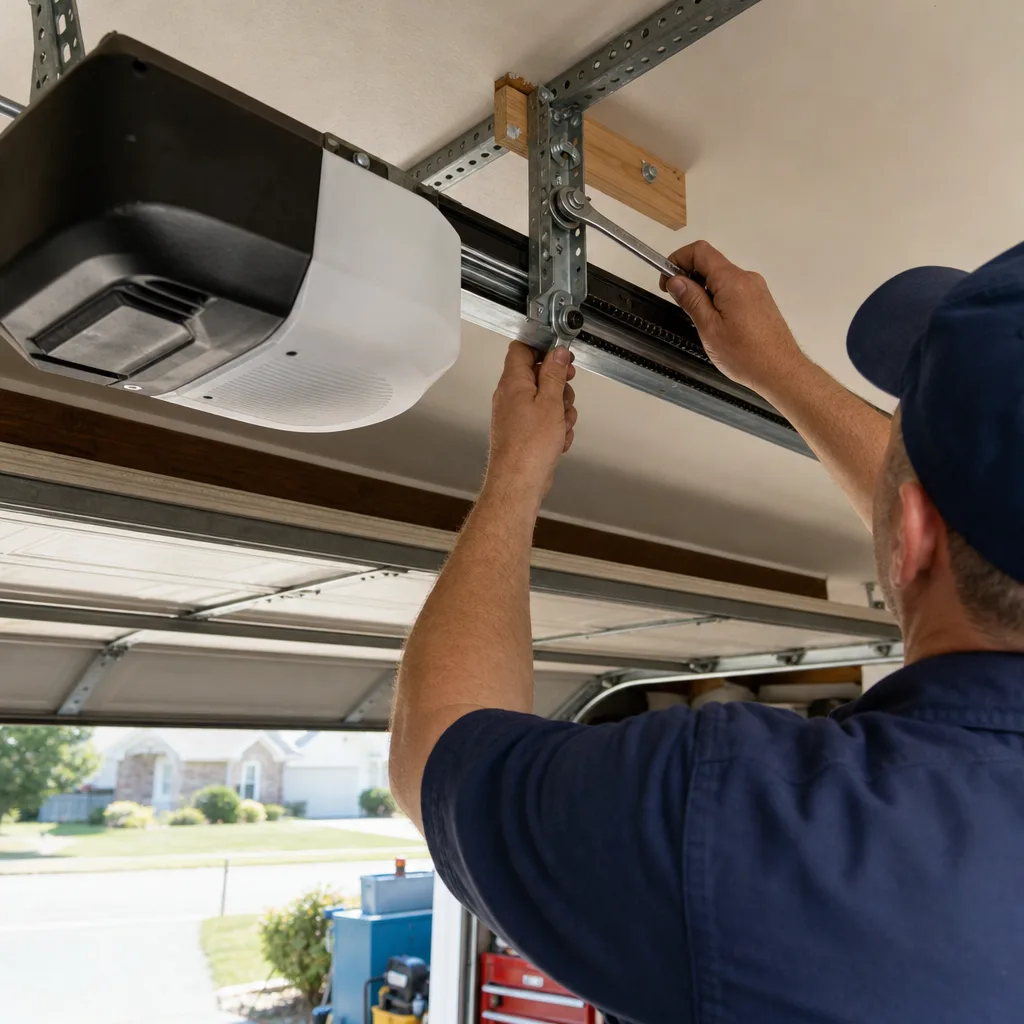
Last updated November 22, 2026
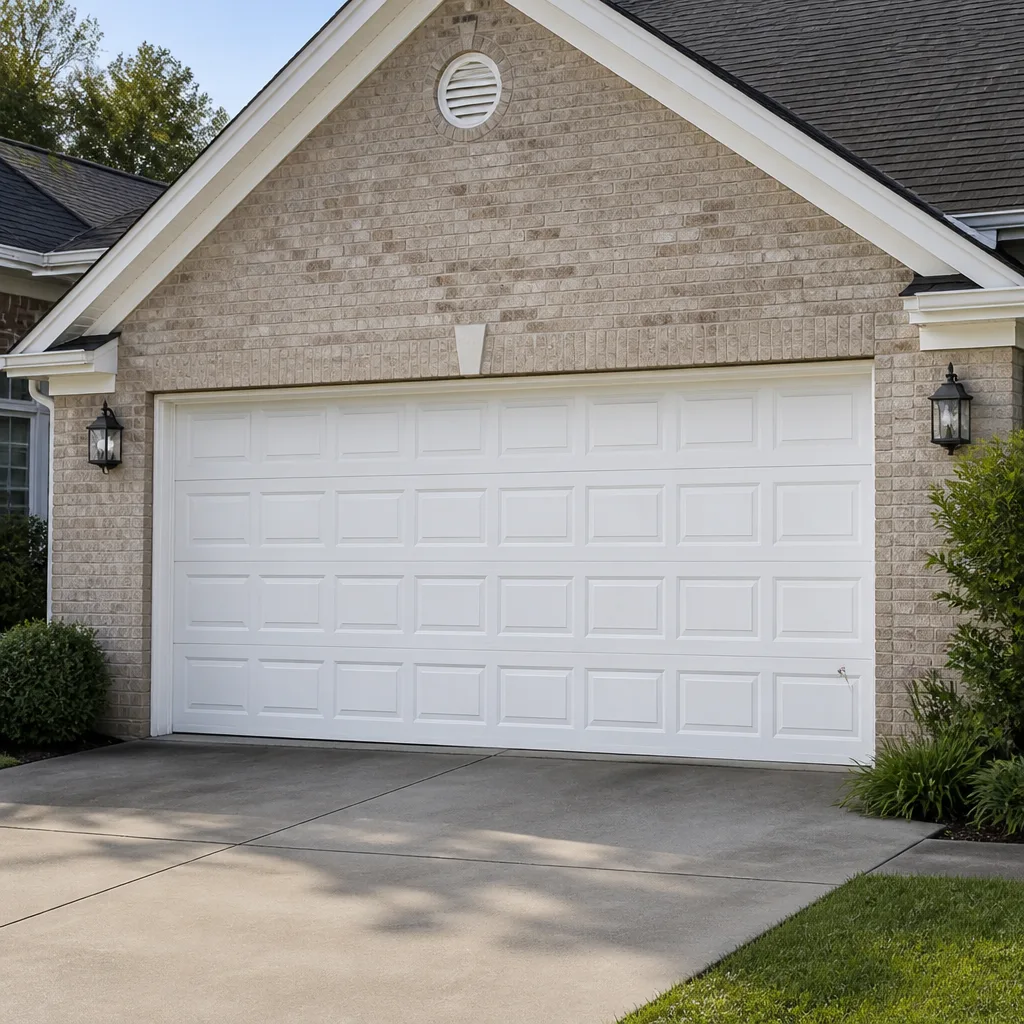 Raised-panel steel
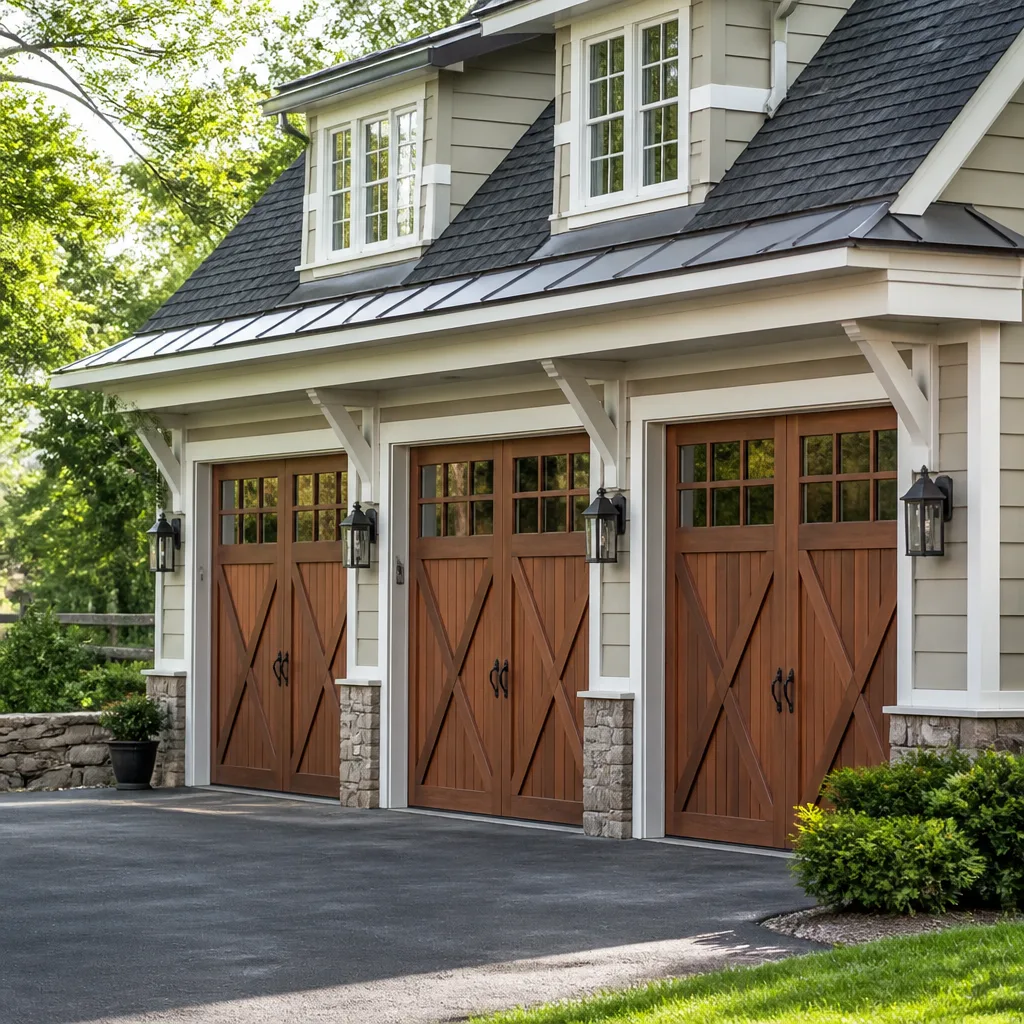 Carriage house
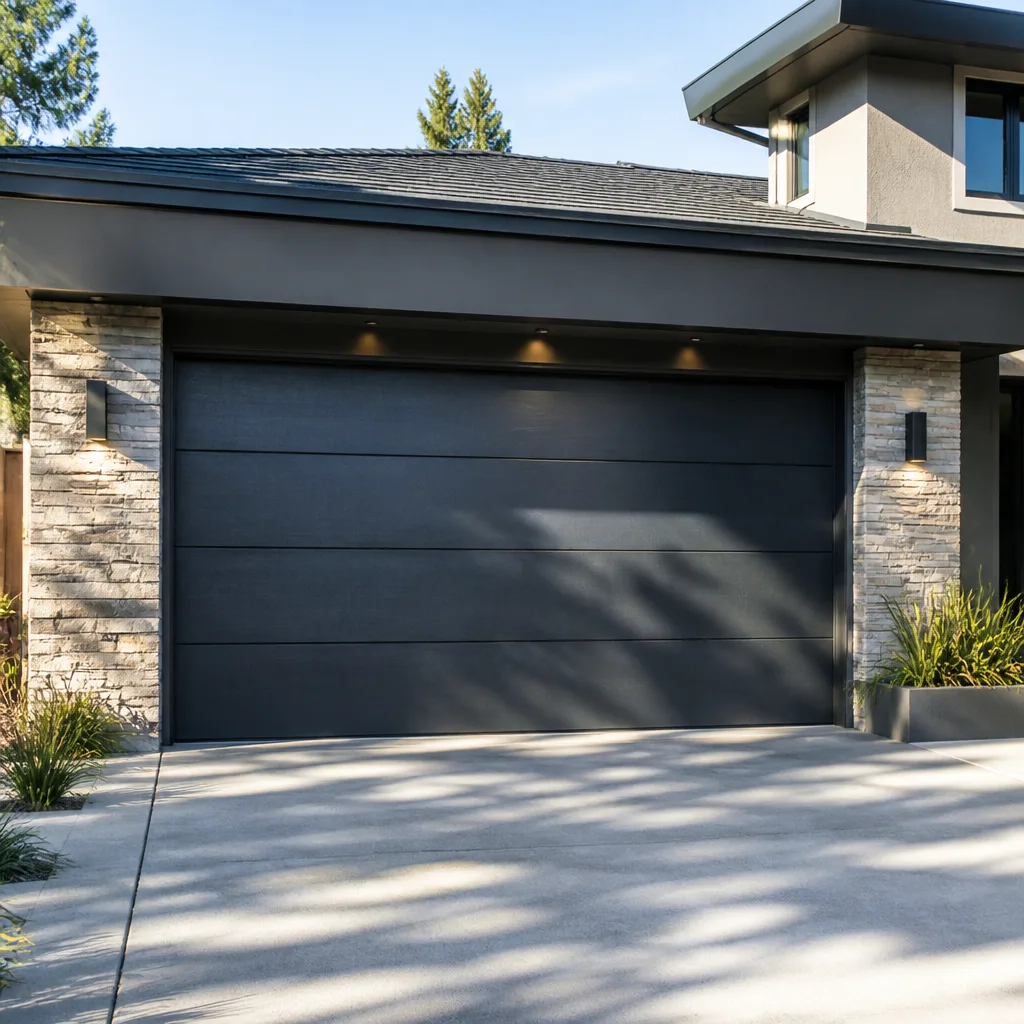 Modern flush
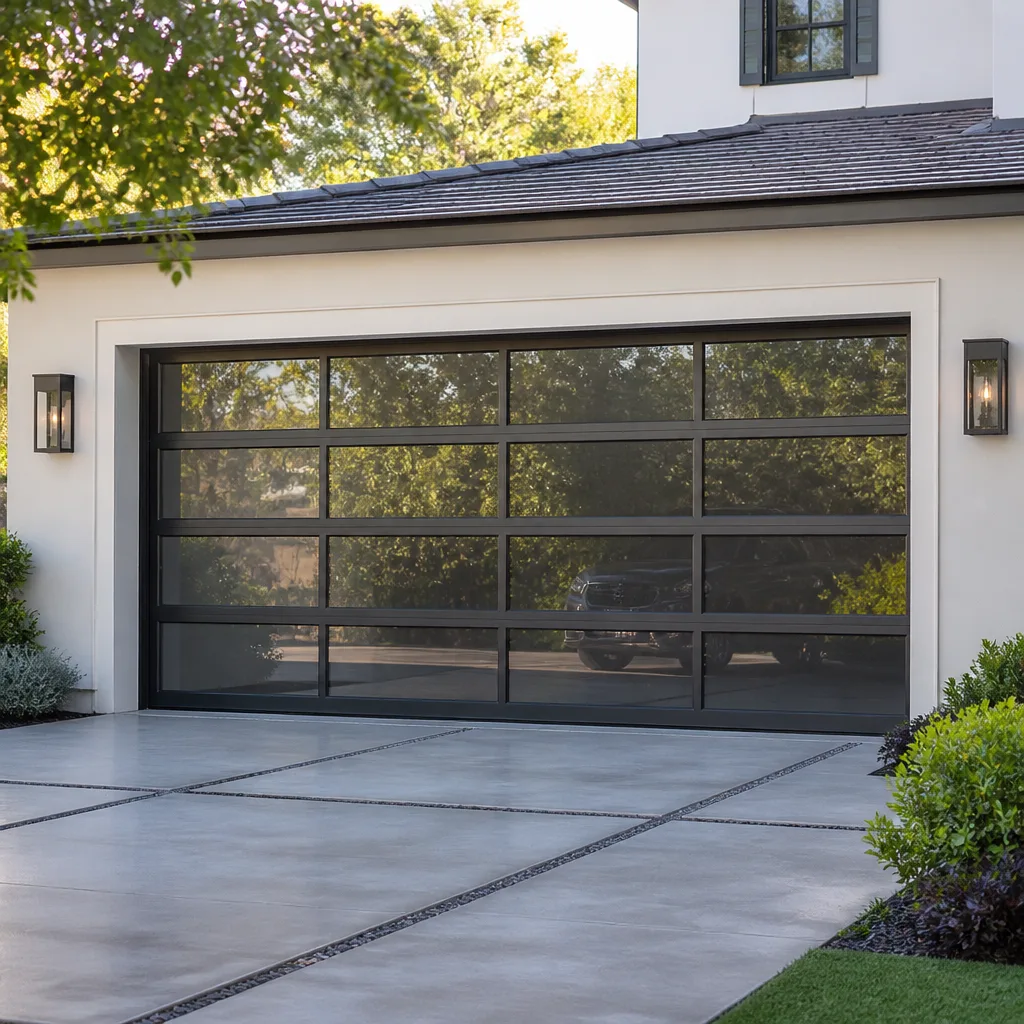 Full-view glass
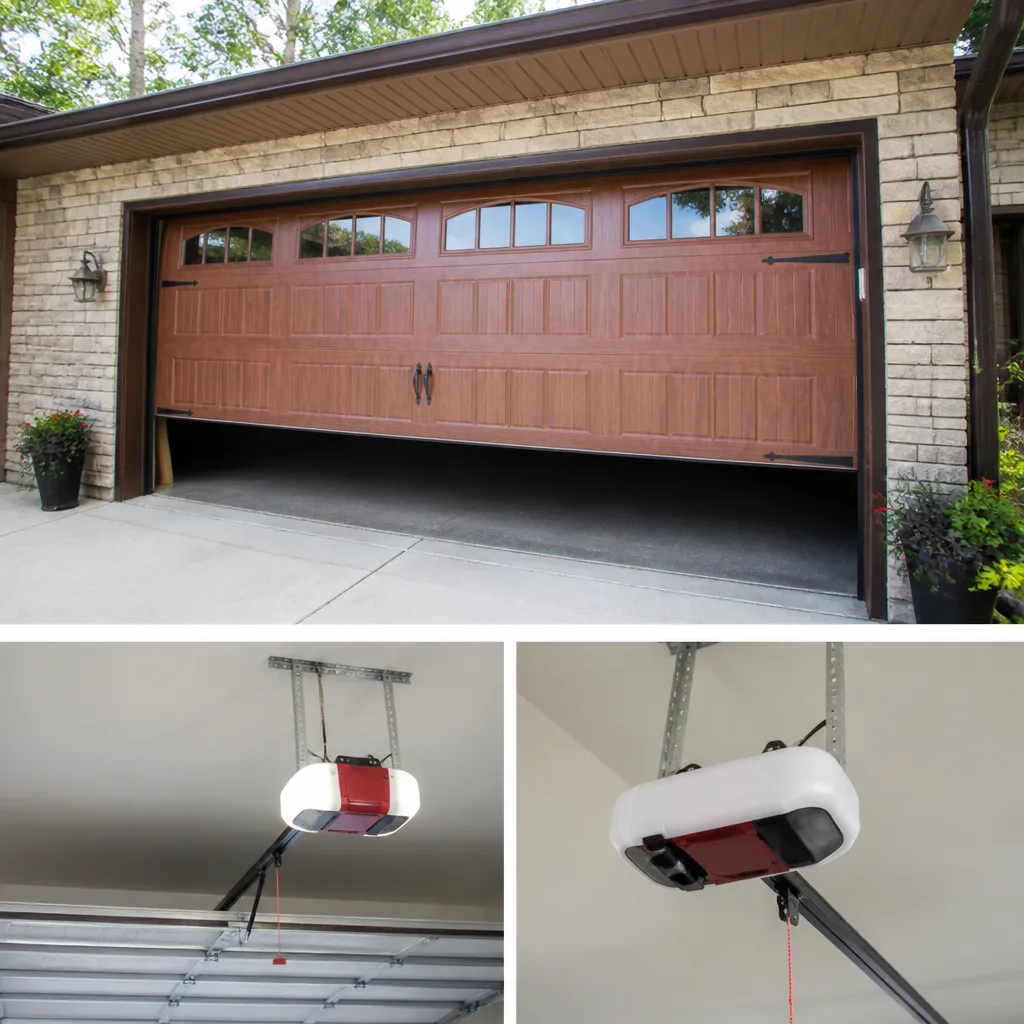 LiftMaster openers
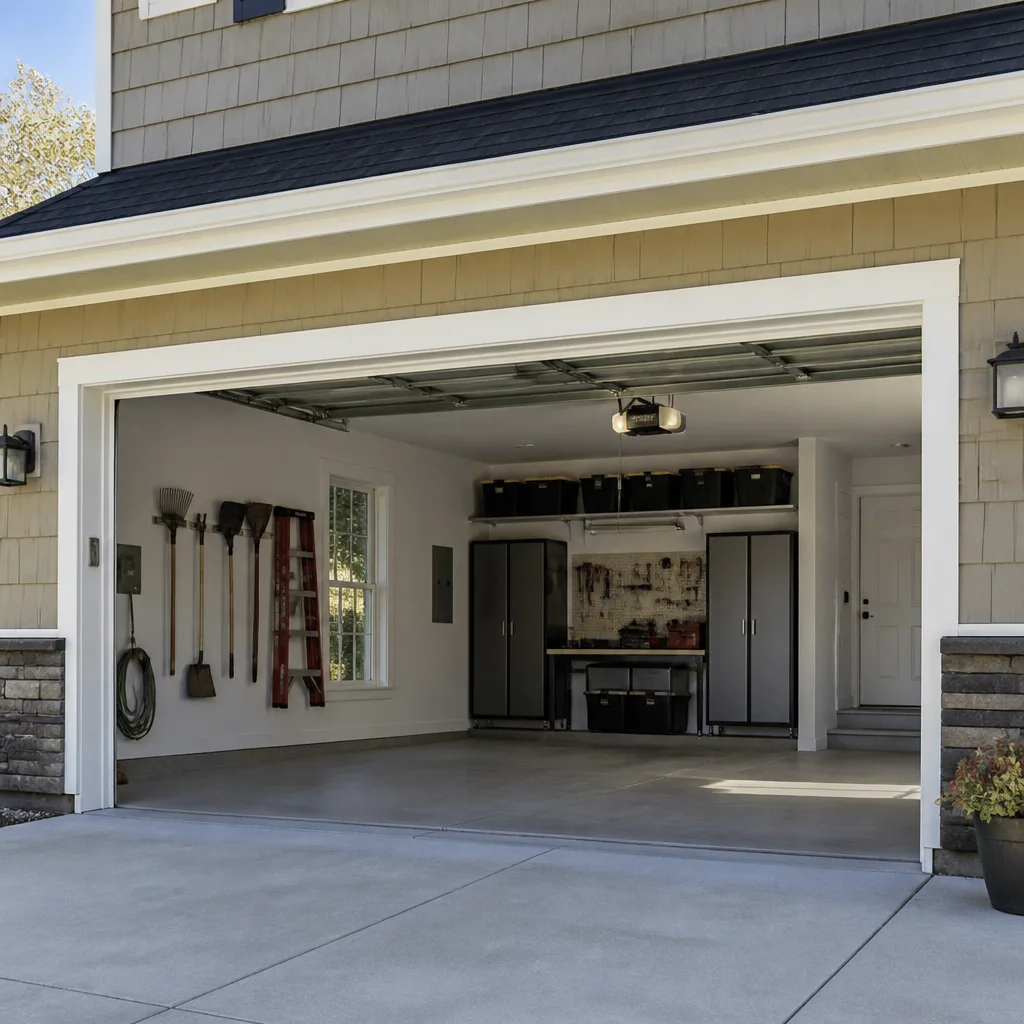 Chamberlain openers
Full 25-point door and opener safety check with every visit - springs, cables, rollers, tracks, and your LiftMaster or Chamberlain opener included
You get a price before we start. It does not change when the pro arrives.
Get your free estimateHow to Hire a Garage Door Contractor in Florence: A Step-by-Step Guide
You don’t need a license to call yourself a garage door contractor in Kentucky. There’s no state trade license specifically required for garage door work here, which means the barrier to entry is a set of hand tools and a phone number. The homeowner is the entire vetting process. That sounds like a warning, but it’s really an advantage once you know what you’re doing: nobody is waving a credential at you that substitutes for a good answer. In this guide you’ll learn how to vet a contractor for a torsion spring, a bent panel, or a dead opener, how to read a written estimate line by line, and how to spot the general handyman who’s about to learn on your door in real time.
Quick Answer
To hire a garage door contractor in Florence, verify three things before work starts: general liability and workers’ comp insurance with a certificate you can read, direct experience with your specific door and opener brand, and a written estimate that itemizes parts and labor with no vague “shop supplies” line. Ask who actually does the work, confirm the company carries its own insurance rather than borrowing a subcontractor’s, and get the price agreed in writing before anyone touches the door.
Styles & brands we work with
- Raised-panel steel
- Carriage house
- Modern flush
- Full-view glass
- LiftMaster openers
- Chamberlain openers
Table of Contents
- What Does Kentucky Actually Require of a Garage Door Contractor?
- What Should an Insurance Certificate Say Before You Hire?
- The Five Interview Questions That Separate Specialists From Generalists
- How to Read a Garage Door Written Estimate
- Why Three Bids Often Backfire
- How to Verify a Contractor Services Your Opener Brand
- What Florence Weather Does to Your Hardware
- How to Order the Work: Repair, Replace, or Both?
What Does Kentucky Actually Require of a Garage Door Contractor?
Kentucky does not issue a trade license specifically for garage door installation or repair. That’s the honest answer, and it’s the single most important thing to know before you start calling around Florence. It doesn’t mean there are no requirements at all: a garage door is a construction component attached to a house, so general contractor rules, local permit requirements, and insurance obligations still apply depending on the scope of the job.
What it does mean is that a contractor’s business card proves nothing. The thing that separates a specialist from a general handyman in Florence isn’t a number on a certificate, it’s what they can tell you about torsion springs, cable drums, and opener force settings without pausing to think. Garage door springs are under extreme tension, and the wrong hands on them can cause serious injury. That’s the real reason licensing matters less here than competence.
Ask directly about the scope of work. A full door replacement on a Florence home typically involves structural attachment, and the city’s building department is the authority on whether a permit is required for your specific project. We tell customers to call the city, not to rely on whatever a contractor says about permits.
- General liability insurance – protects your home and property if something is damaged
- Workers’ compensation coverage – protects you if someone is injured on your property
- A written agreement – your only real protection when there’s no state license number to check
The absence of a licensing barrier means the vetting job is yours, and the rest of this guide is about doing it well.
What Should an Insurance Certificate Say Before You Hire?
You want to see a certificate of insurance that lists general liability coverage and workers’ compensation for the crew doing the work, issued in the legal business name, with the name matching the estimate. If a Florence contractor can’t produce one, that’s your answer.
Here’s where a lot of homeowners get tripped up. A subcontractor may hand you a certificate that names the general contractor as the insured party or shows a different legal entity entirely. That’s not the same protection. If the person swinging the wrench isn’t covered by the policy you’re looking at, you’re relying on their personal coverage and their willingness to use it. Ask the plain question: “Is the technician who’ll be at my house covered by this policy, or are they a subcontractor?”
You don’t need to be an insurance expert. You need to read the business name, the coverage types, and the effective dates, and then compare them to the estimate in your hand. If the details don’t line up, ask why. A straightforward company answers without defensiveness.
What to Look For on the Certificate
- Legal business name that matches the estimate and the invoice
- General liability coverage in an amount that reflects the work being done
- Workers’ compensation, or a clear answer about why the crew is exempt
- Current effective dates, not a certificate that expired last season
If you’re comparing a few Florence companies, this step alone will narrow the field fast. It’s also why we encourage homeowners to ask before the appointment, not after.
The Five Interview Questions That Separate Specialists From Generalists
The right questions do more work than any credential check. These five expose the contractor who farms work out, the one who upsells parts as routine maintenance, and the one who’s never worked on your brand of door.
1. “Who will actually be at my house?”
If the answer is a subcontractor, you’ll want to know the same insurance and experience details about that person as you did about the company. Our answer is simple: our technicians have up to 11 years of experience, and the technician who reviews your door is the one who does the work.
2. “How many springs do you replace when one breaks?”
Garage door springs are installed as matched pairs, and when one fails the other is usually near the end of its life. A contractor who replaces only one spring and leaves the other in place is often creating a second visit. Ask whether the estimate covers one spring or a pair, because the price changes meaningfully.
3. “What brand experience do you have with my opener?”
Every opener brand has its own control board, travel limits, and parts ecosystem. A contractor who works mainly on one brand and improvises on another isn’t the same as one who services the major brands routinely.
4. “What’s included in the estimate, and what would add to it?”
The good answer names specific things: hardware replacement, cable inspection, labor, disposal. The bad answer is vague enough that any future charge qualifies as “extra.”
5. “What’s your process if the price changes once you’re on site?”
There’s a right time to learn that a price could change, and it’s before work starts. The price should be quoted and agreed before any work begins. Ask them to say it out loud.
A company that answers these without hesitation is telling you something. So is one that doesn’t.
How to Read a Garage Door Written Estimate
A written estimate is the only price that counts. Not the number quoted on the phone and not the ballpark a technician mentions while walking to the truck. Before you approve anything, the estimate should be specific enough that you can read it back and explain every line to someone else.
Line Items a Complete Estimate Includes
- Parts, named and counted – “one torsion spring” or “matched pair,” not “spring replacement.” One spring and a pair are different jobs at different prices.
- Labor, as a stated amount – a flat number or an hourly figure tied to an estimated duration. Vague “labor” lines are where surprise charges hide.
- Hardware – hinges, rollers, cables, and bearings that will be replaced should appear by name.
- Disposal – old doors and spring components have to go somewhere. Say whether that’s included.
- What’s excluded – particularly useful. Anything not listed here is something you may be charged for later.
Red Flags in the Estimate
Watch for a single lump sum with no breakdown, a labor line described as “as needed,” and parts described as “shop supplies” or “miscellaneous.” Those words are rarely used by a contractor who intends to give you a final number.
The written estimate sets the final price. Ours is free, and if something changes once the door is opened up and inspected, the change gets explained and agreed before the work continues, not after. That’s the standard to hold any Florence contractor to.
Why Three Bids Often Backfire on Garage Door Work
The standard advice to get three bids assumes a mature, regulated trade where every quote describes the same scope. Garage door work isn’t that. Three estimates can easily describe three different jobs, and the lower number usually means something was left out rather than that the price is better.
What Usually Happens With Three Bids
- Bid A quotes one spring. Bid B quotes a matched pair. You’re comparing apples to a different job.
- Bid C uses the word “repair” without naming a part, making it impossible to compare to either of the other two.
- The lowest number is the one missing cable inspection, hardware replacement, or disposal.
- You choose the lowest number and the missing items get added later.
What works better is getting one thorough, itemized estimate and checking it against a second one only if you feel uncertain. The comparison is more useful when both are itemized. If one is a single number and the other is a breakdown, the conversation is about scale, not scope.
In our experience, the homeowner who asks the right questions on one appointment ends up with a better outcome than the one who runs three appointments and chooses on price. The price is only meaningful when the scope is identical. Prices on this kind of work are per job by estimate, and the written estimate is where the real comparison lives.
How to Verify a Contractor Services Your Opener Brand
Openers fail in specific, brand-specific ways. A LiftMaster logic board problem isn’t the same repair as a Genie travel limit adjustment, and a Craftsman unit that came with the house has its own parts chain. When a contractor fumbles for an answer on your brand, you’ve learned something before the appointment is even booked.
The easiest way to find out is to have your model in hand. Look at the back panel of the motor unit for a model number, and note whether the wall button is a plain push button or has a brand name on the face. When you call, say: “I have a [brand] opener, model [number], and it does [what it does].” The response tells you whether you’re talking to somebody who knows the model or someone who plans to figure it out when they arrive.
We’re certified to service eight major brands: LiftMaster, Chamberlain, Genie, Clopay, Amarr, Wayne Dalton, Craftsman, and Raynor. Between those, most doors and openers in Florence homes are covered. That matters when the repair involves a matching door panel or a replacement remote, because aftermarket parts don’t always fit the way the originals do.
If your brand isn’t one we work on regularly, we’d rather tell you than sell you an appointment. That same honesty is worth expecting from any contractor in Florence. Our garage door opener repair pages list the systems we work on, which is the fastest check before you book.
What Florence Weather Does to Your Hardware
Florence sits in Northern Kentucky, where the seasons are real. Cold winter mornings tighten the steel, and the spring has to overcome more resistance when you first raise the door. Summer humidity works on the wood, if you have a wood door, and can cause components to swell or bind. The pattern means the garage door gets stressed from both directions across the year, and hardware that’s already near its limit fails first when the temperature swings hardest.
What that means practically: a door that grinds in January but not in June is telling you the torsion system is under-adjusted or worn, not that it’s temperamental. A door that drags in the summer heat may have a lubrication issue or a worn roller, and that’s cheaper to fix in June than to replace after the wear compounds.
If you’re scheduling non-urgent work in Florence, late spring and early fall are easier months for examining a door without freezing the crew, and easier for scheduling normal replacement work. Winter failures are the ones that push the decision in a hurry, which is when a clear policy on garage door repair and a stated emergency availability matter most.
How to Order the Work: Repair, Replace, or Both?
Once you’ve picked your contractor, the next decision is what work gets done when. A door that’s bent but has a healthy opener is a different job than an opener that won’t respond to a functioning door. Sorting this out before the appointment keeps the estimate accurate and the visit focused.
Which Comes First?
- Broken spring, working opener – the door won’t lift. Spring work comes first, and it’s the most technically demanding repair on the system. See garage door spring repair for what’s involved.
- Working door, dead opener – the door moves by hand but the motor doesn’t. That’s an opener diagnosis, often a board or a travel limit setting.
- Both failing – age usually explains the coincidence. If the door is well past viability, new door installation may be the better spend than repairing both.
- Cosmetic damage from impact – a closed wrong on a car bumper or similar is a panel job. Most panels can be sourced for common brands; on less common doors, panel availability affects the timeline.
If it’s a full replacement, the process works differently from a repair. We measure the opening, confirm the door and opener specification, order it, and schedule the install, so replacement pricing and timing are worked out before anything is ordered. That’s different from same-day repair work, which we can often handle on the day you call. Our Florence Garage Door Repair Pros overview lists all five service areas if you’re still deciding which one applies.
Common Mistakes to Avoid
- Choosing on price alone. The lowest number almost always means a smaller scope. Compare what’s in the line items, not just the total, or you’re comparing two different jobs.
- Not verifying insurance. In a trade with no state license requirement in Kentucky, the certificate is the only paperwork that actually means something. Ask for it and read it.
- Replacing just one spring. Springs are installed in matched pairs. Doing one now means doing the other soon, often at an inconvenient time, and usually at a higher combined cost than the pair done together.
- Skipping the model number. A contractor who arrives without knowing your opener brand may not be able to source the right part on the same visit. Note the model before the call.
- Trusting an unwritten quote. The number agreed on the doorstep is the number that disappears when the invoice arrives. Get it in writing before work starts.
- Attempting spring work yourself. This is the one part of the system that consistently injures experienced people, let alone homeowners. Springs are under extreme tension, and the correct approach is to have trained technicians handle them.
- Using a general handyman for a full replacement. Hanging a new door involves track alignment, spring tension, and opener force settings that all have to work together. It’s a specialist job even when it looks like carpentry.
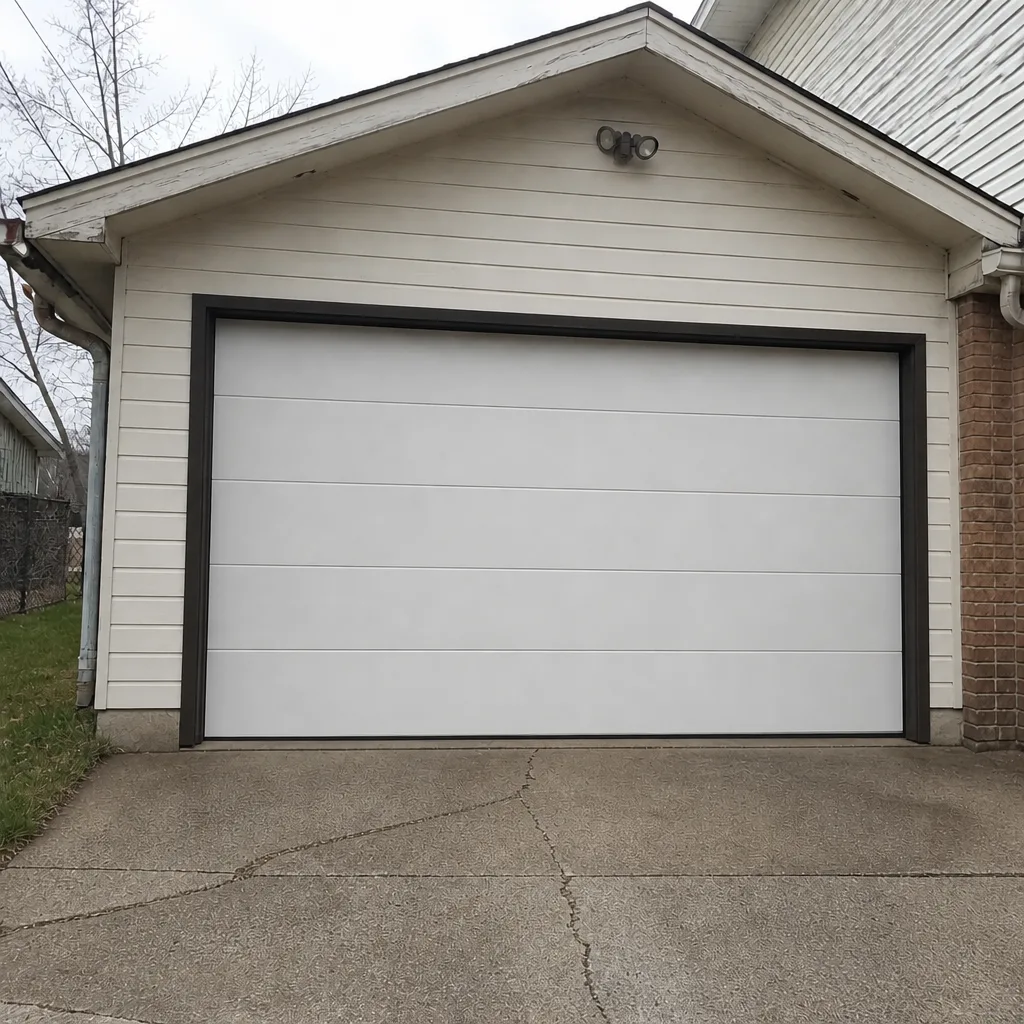
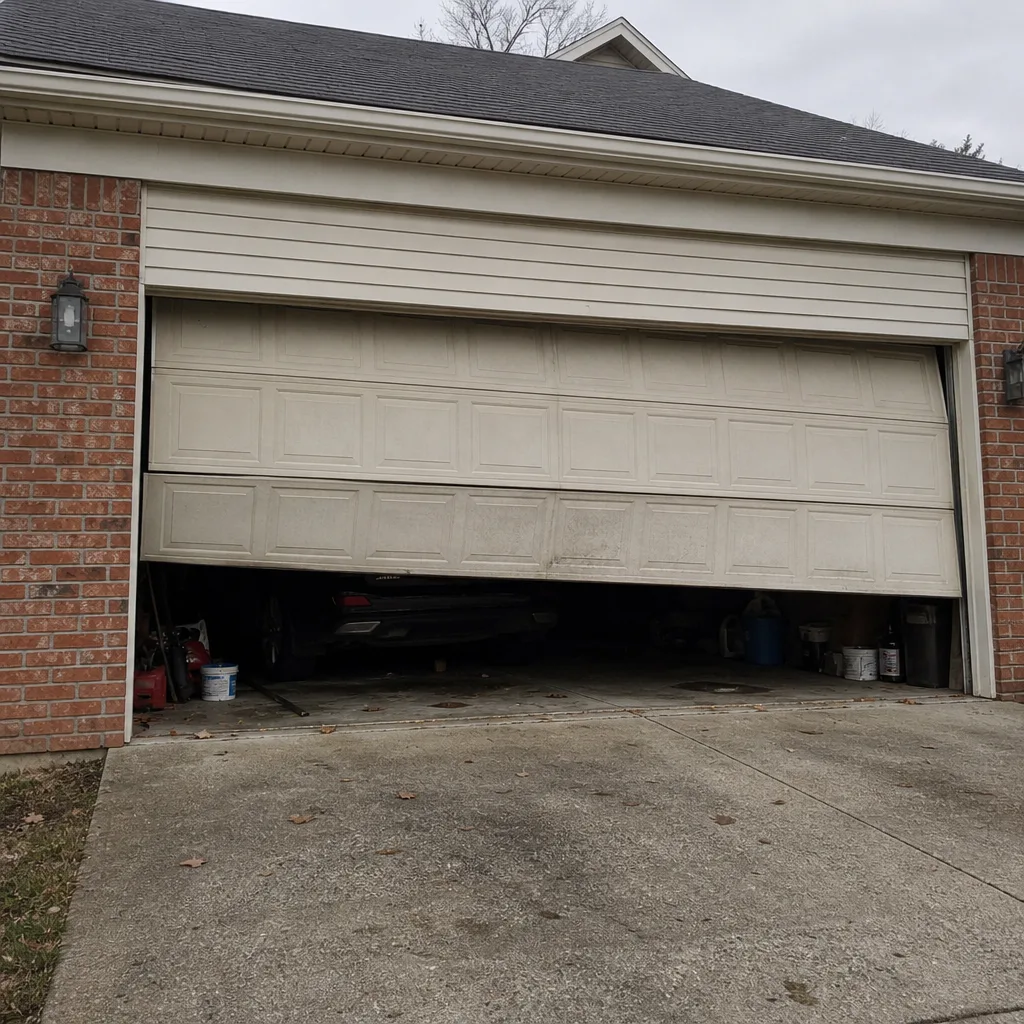
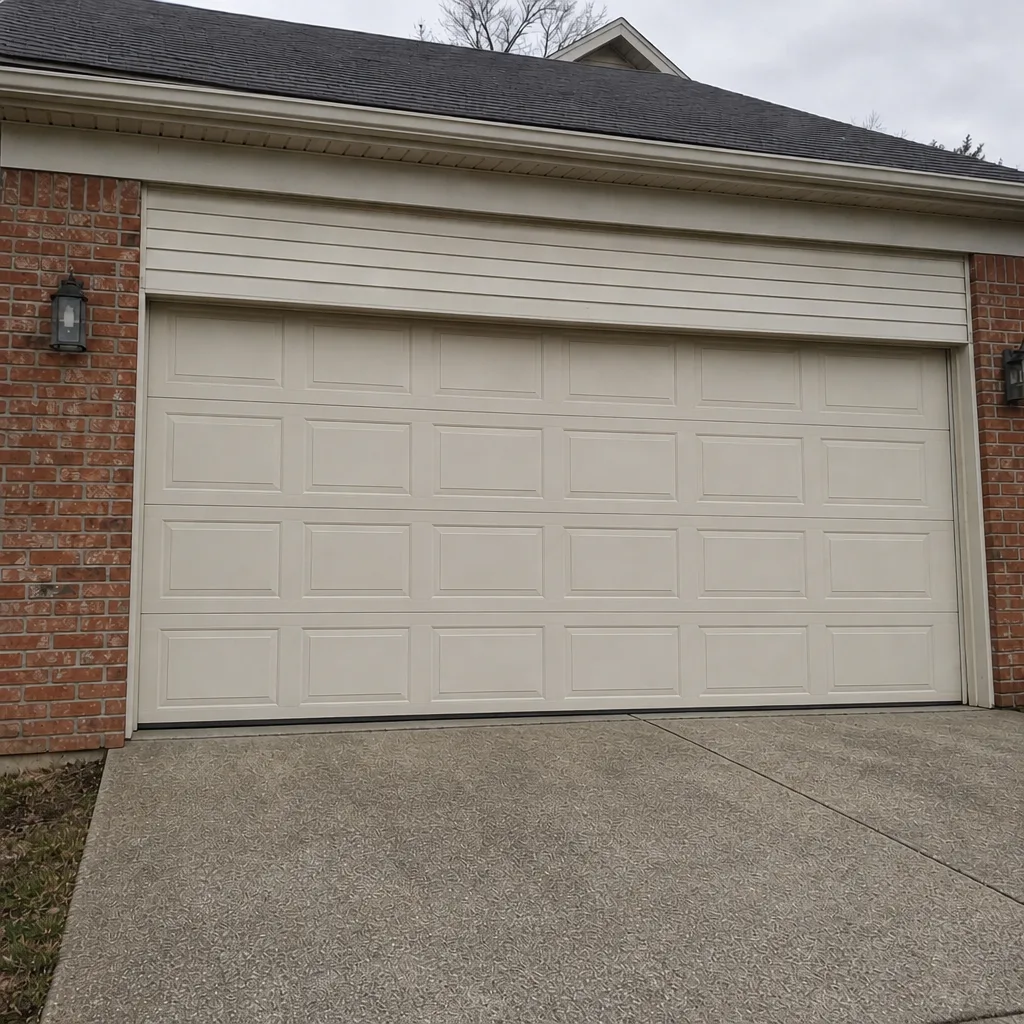
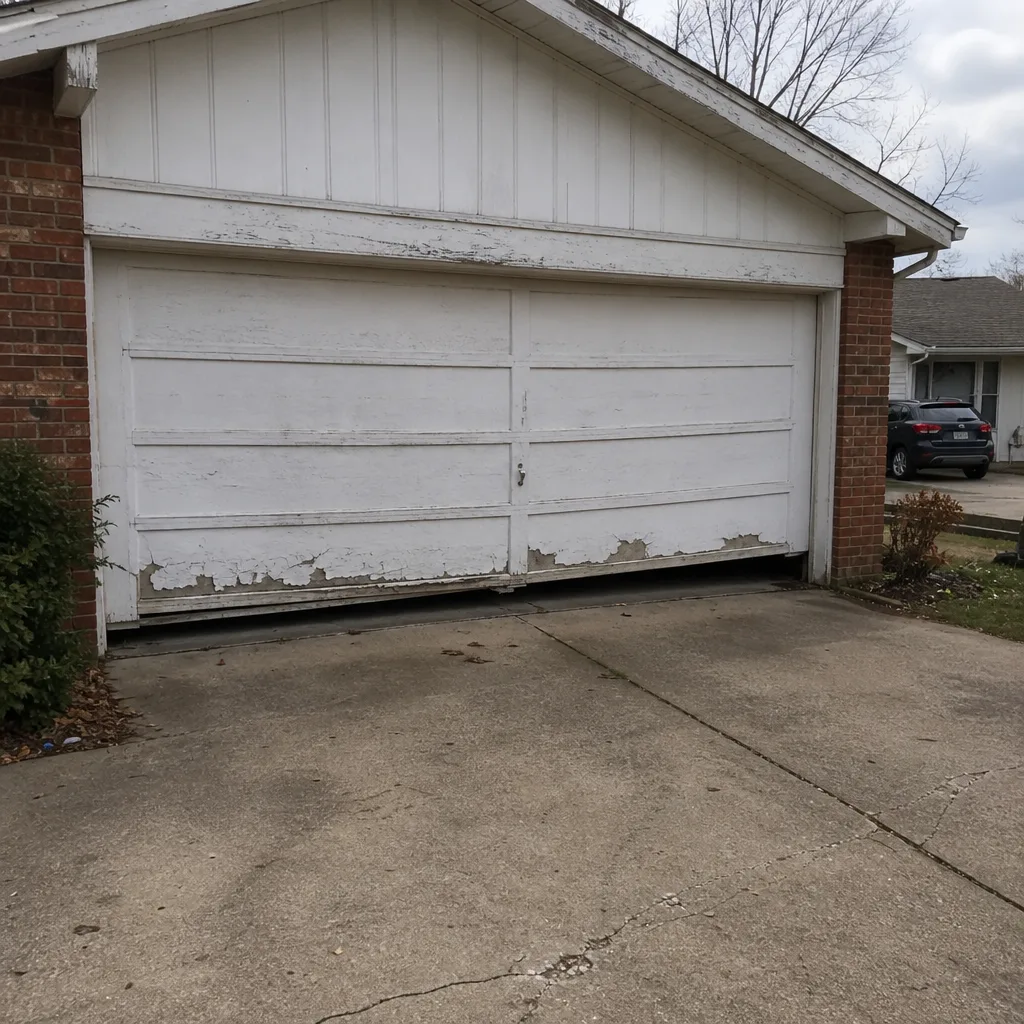
See the difference
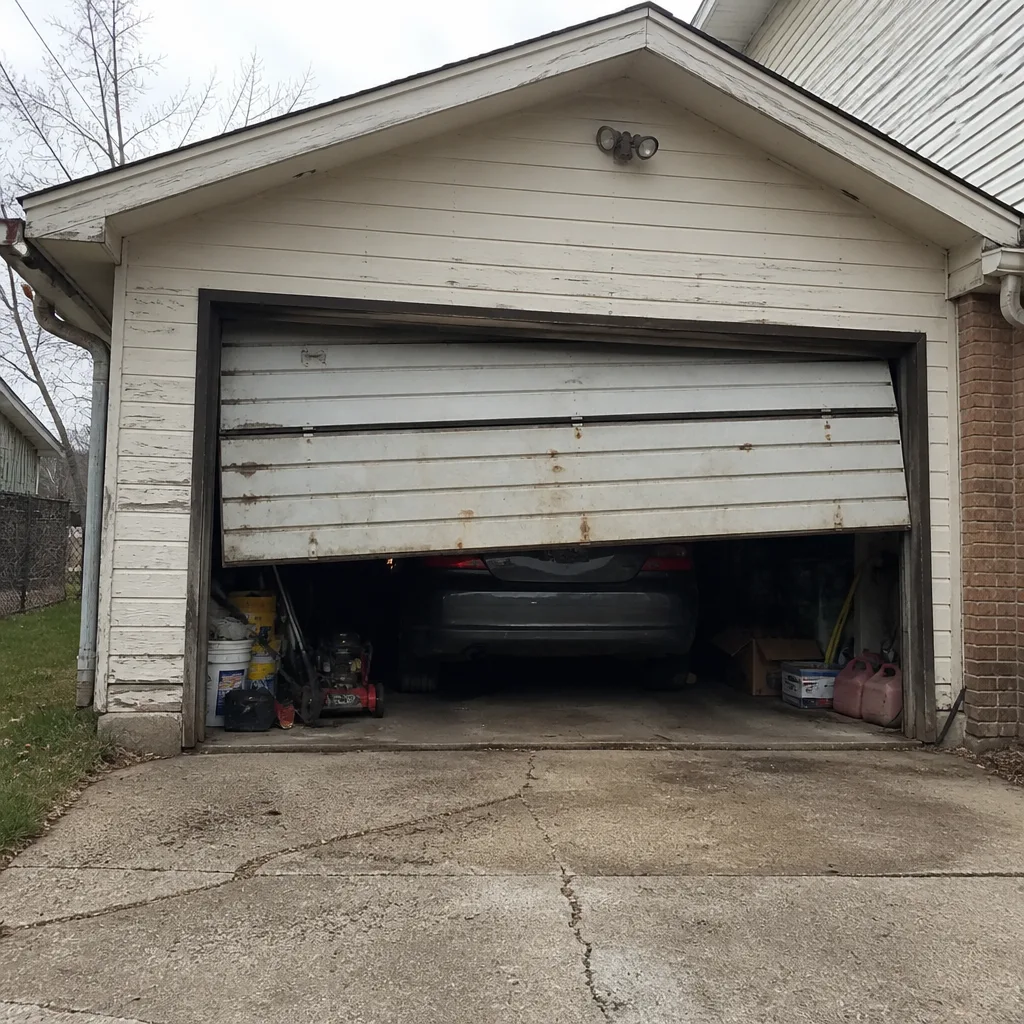 Before
 After
 Before
 After
 Before
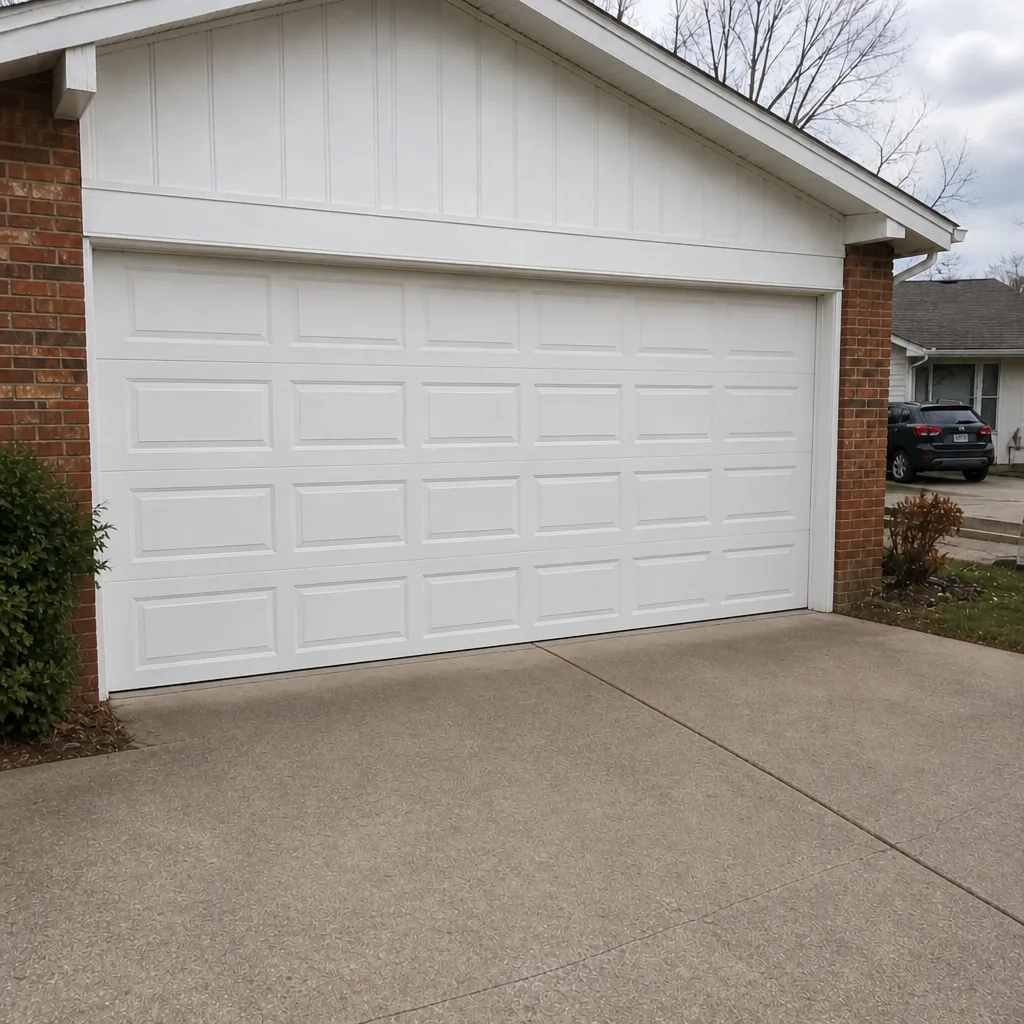 After
When to Call a Professional
Some garage door problems are a matter of convenience. Others are a matter of safety. The line between them is whether the failure involves the spring and cable system, the electrical side of the opener, or the physical stability of the door.
Call a professional if the door won’t lift at all, if it lifts unevenly or hangs at an angle, if you hear a loud snap from above the door, or if the door comes down faster than it should. Also call if the door has come off a track, if the opener’s wall button doesn’t respond, or if the door reverses on its own. In each case, the right first step is to stop using the door, particularly the remote, and get someone out to look at it.
We handle garage door repair for broken springs, panels, and hardware, along with opener diagnostics and full door installation. Some jobs need a same-day repair, and some are scheduled installation or replacement that needs measuring and ordering first. In both cases the price is quoted and agreed before work starts.
Florence Garage Door Repair Pros offers free estimates in Florence. Call (844) 681-4337. We answer 24/7. Fast dispatch from 7am to 7pm, Sunday through Friday. If a door fails on a Saturday, call and we’ll book you for Sunday.
Frequently Asked Questions
Kentucky doesn’t require a specific trade license for garage door work, so there’s no state license to verify. Instead, ask for proof of general liability insurance and workers’ compensation, and confirm the coverage applies to the crew doing the work. The insurance certificate and a written estimate are your real protections. Call (844) 681-4337 with any questions before you book.
Typical ranges in the Florence area start around $150 to $350 for common spring and opener repairs, and rise to $800 or more for heavier repairs or replacements. The exact number depends on the parts involved and how much labor the job takes, so get a written estimate and compare line items, not totals. Call (844) 681-4337 for a free estimate, and confirm the price before work starts.
Same-day repair is often possible when you call during normal dispatch hours, and the fastest way to find out is to call. We answer 24/7. Fast dispatch from 7am to 7pm, Sunday through Friday. If you’re outside dispatch hours, we’ll book you into the next opening. Call (844) 681-4337.
The written estimate sets the price. If the door reveals something unexpected when it’s inspected, the change gets explained and agreed before work continues, never after it’s done. That’s how a reputable Florence contractor should operate. Call (844) 681-4337 for a free estimate on your situation.
Kentucky doesn’t issue a garage door trade license, so the correct question is about insurance. Ask for a certificate of general liability coverage and workers’ compensation, and confirm it lists the legal business name on the estimate. We’ll provide that paperwork before scheduling. Call (844) 681-4337 for the details.
Because when a door and an opener both fail at the same time, the two failures are related more often than you’d expect, and splitting the work between two companies can leave each blaming the other. One call covers the spring, the opener, and the door if it needs replacing. Call (844) 681-4337 for a single estimate.
The Bottom Line
Hiring a garage door contractor in Florence comes down to asking the right questions and reading the paperwork carefully. Kentucky doesn’t license this trade, so there’s no badge to verify: the insurance certificate, the written estimate, the brand experience, and a straight answer to “who’s coming to my house?” are the real checks. Skip the three-bid ritual, get one thorough itemized estimate, and question any number that isn’t broken down. Springs and openers both reward a specialist’s diagnosis. When you’re ready, call (844) 681-4337. We answer 24/7, with fast dispatch from 7am to 7pm, Sunday through Friday.
Written by the team at Florence Garage Door Repair Pros.