
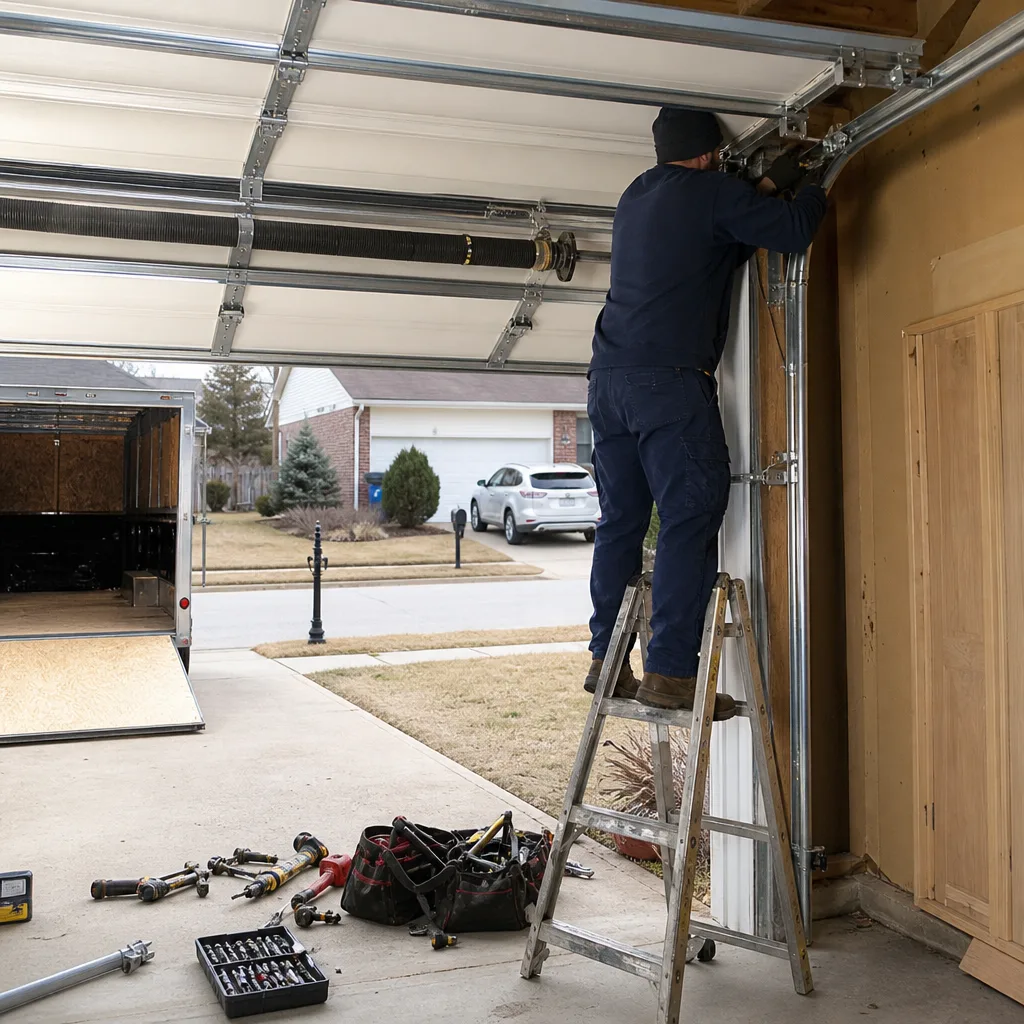
Last updated November 22, 2026
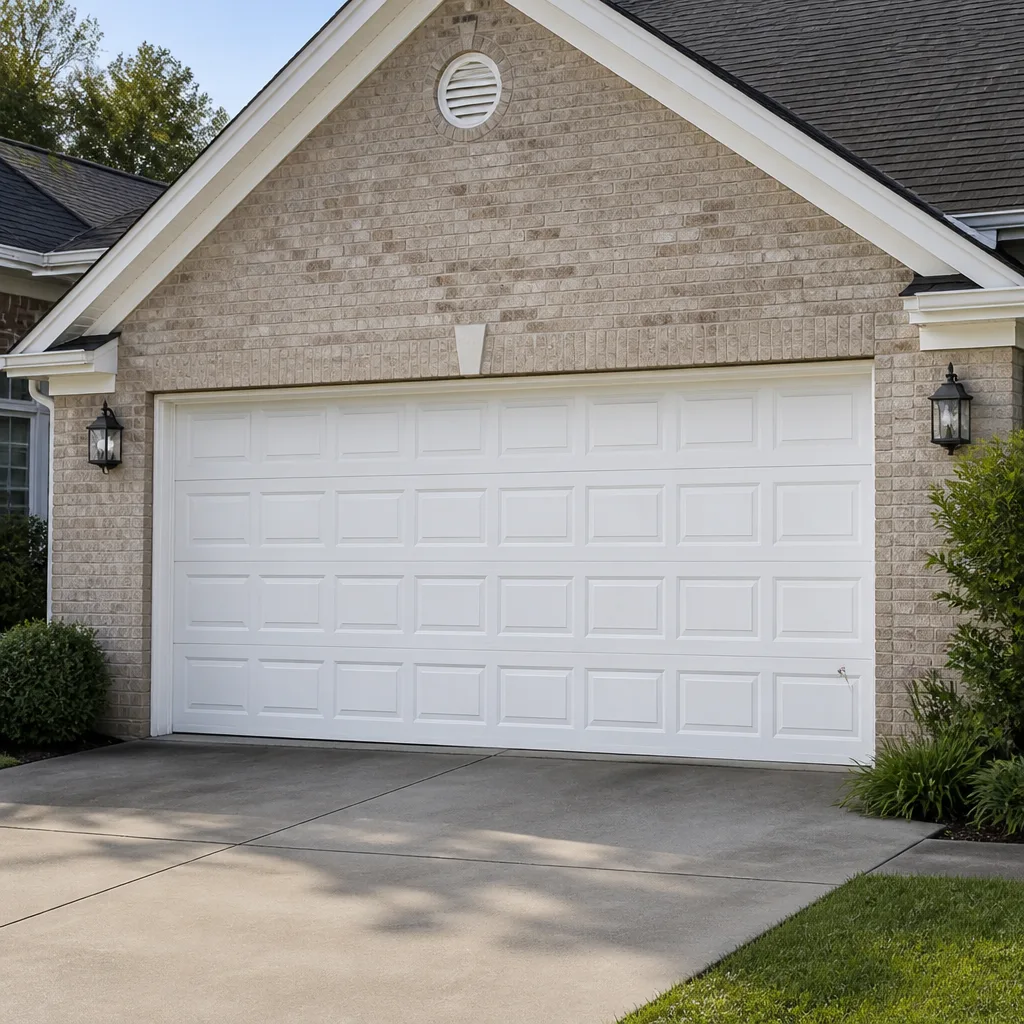 Raised-panel steel
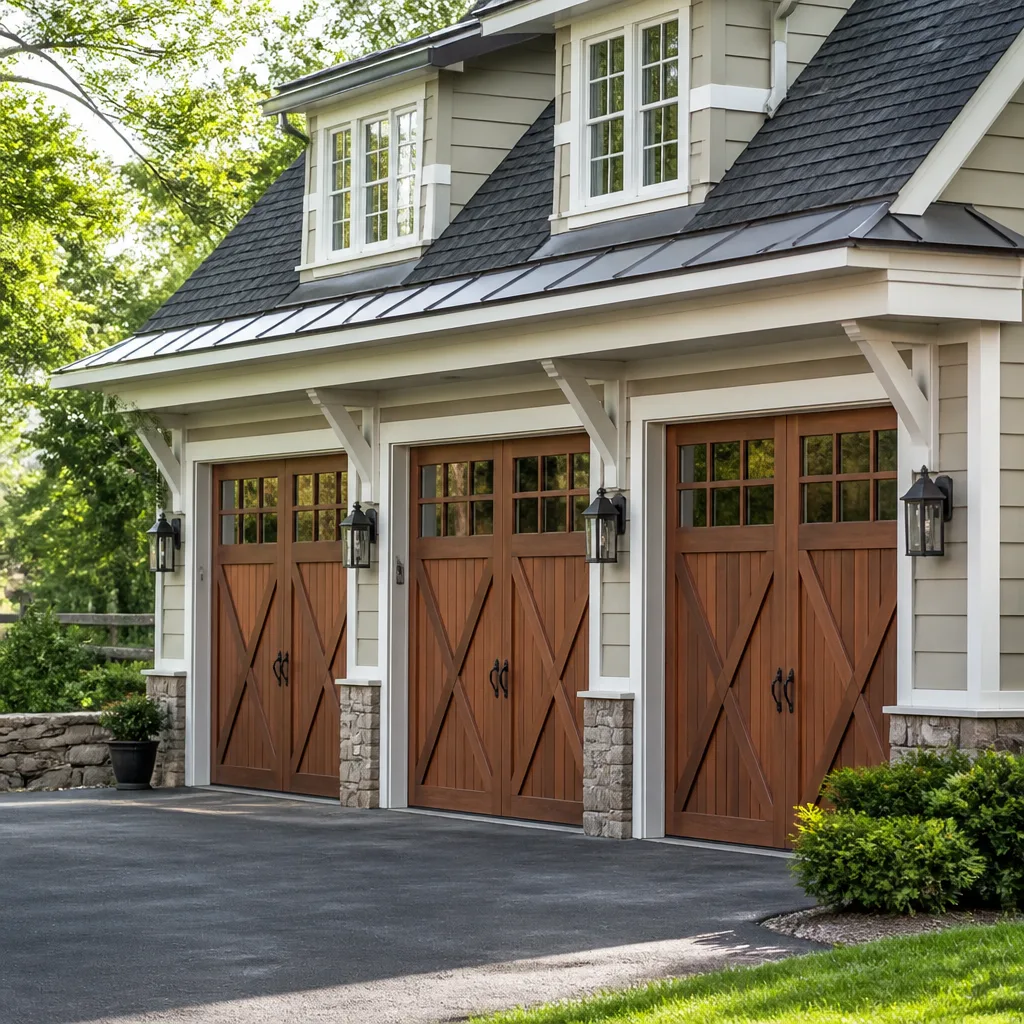 Carriage house
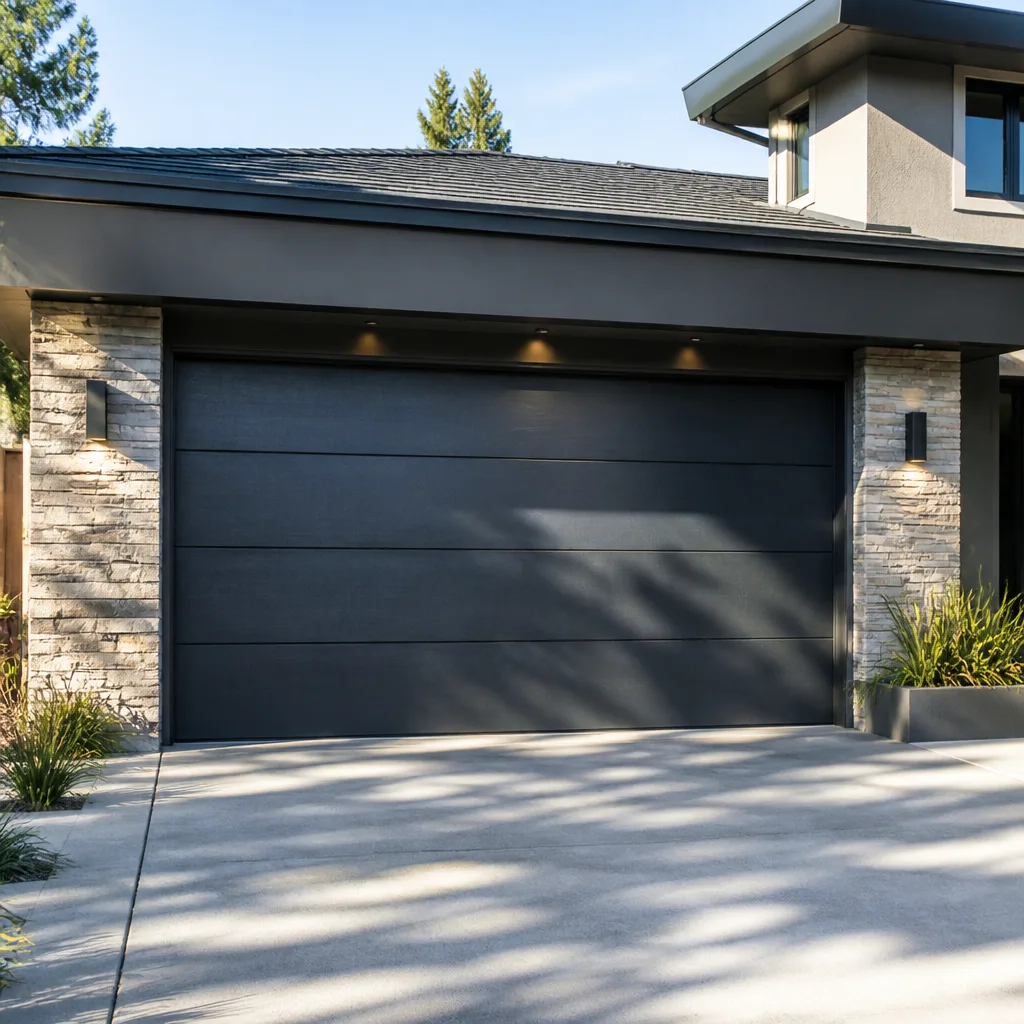 Modern flush
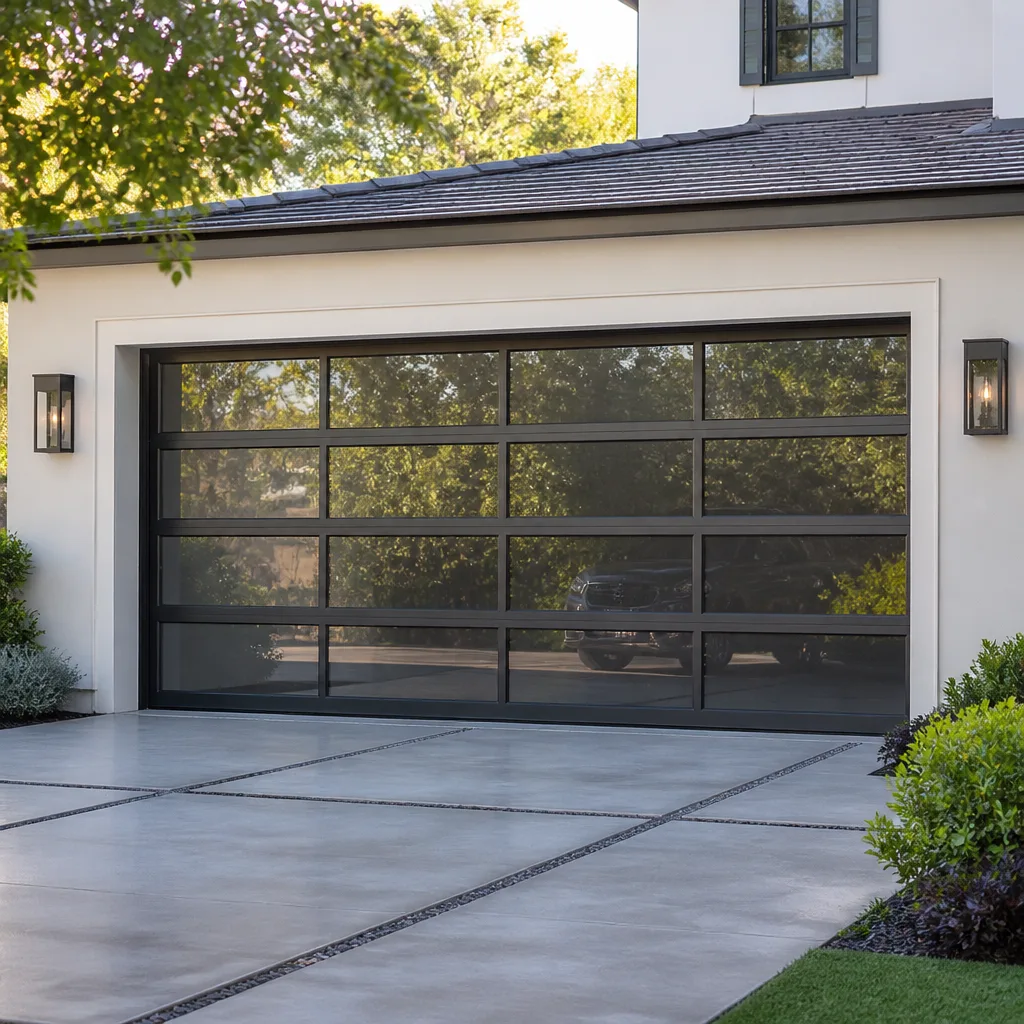 Full-view glass
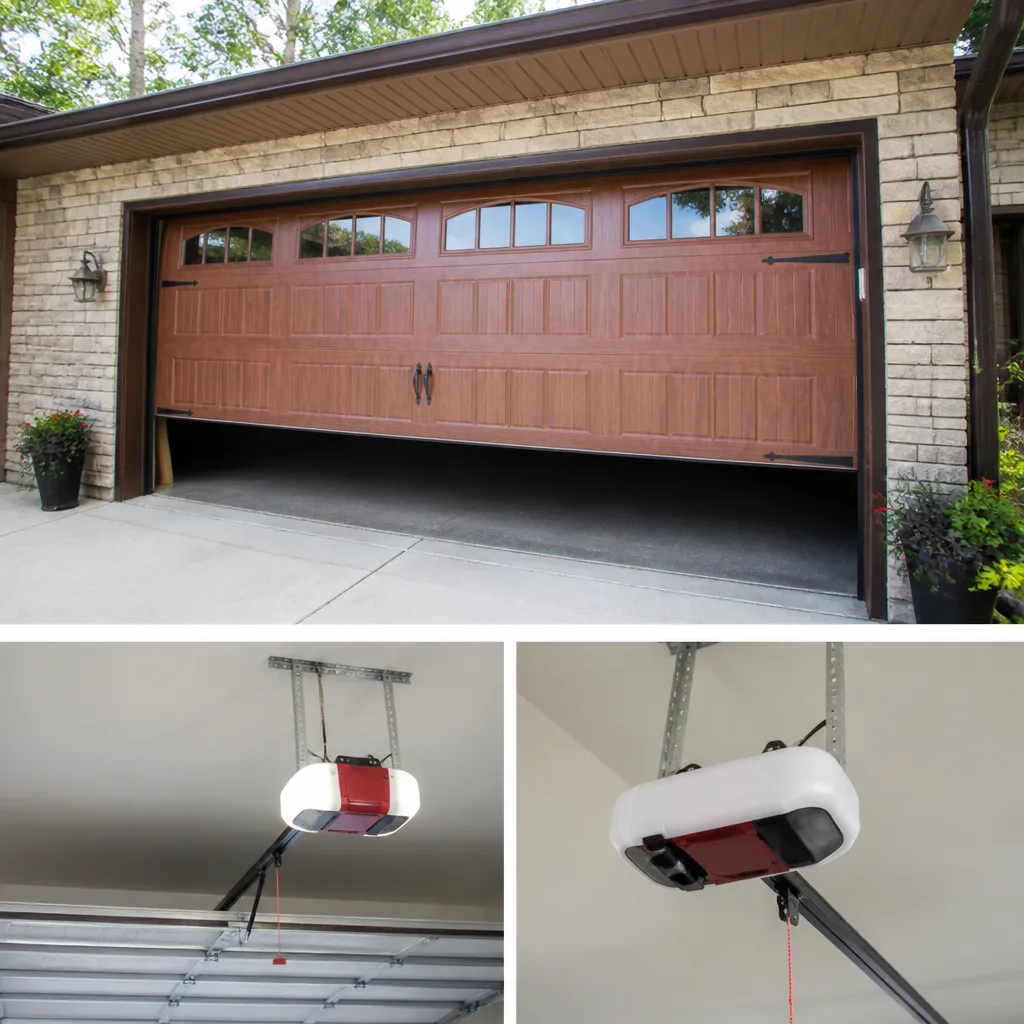 LiftMaster openers
 Chamberlain openers
Full 25-point door and opener safety check with every visit - springs, cables, rollers, tracks, and your LiftMaster or Chamberlain opener included
You get a price before we start. It does not change when the pro arrives.
Get your free estimateGarage Door Warning Signs: A Florence Homeowner’s Reference Guide
A grinding noise coming from your opener and a grinding noise coming from your spring mechanism can sound almost identical from inside the garage. One is a motor with a worn gear that you can schedule for later this week. The other can mean a torsion spring is about to let go, and that’s a door you stop using today. Most warning-sign articles flatten every symptom into one urgent category, which leaves homeowners either panicking over a cosmetic issue or ignoring a genuine safety problem. This guide sorts the signs a Florence door shows into three useful buckets: stop using it now, schedule a repair soon, and watch it for the next couple of weeks. We’ll also cover how garage doors behave in Florence’s humid summers and cold snaps, and how to document a problem so an estimate actually lands on the right number.
Quick Answer
Garage door warning signs fall into three urgency levels: stop using the door immediately for snapped or visibly stretched springs, frayed cables, a door hanging crooked, or any door that reverses unpredictably. Schedule a repair within days for grinding, slow travel, unbalanced weight, or a gap at the floor. Monitor and maintain for minor squeaks, worn weatherstripping, and remote fade. In Florence, the humidity and freeze-thaw swings speed up wear on springs and cables, so signs often appear sooner than they do in drier climates.
Styles & brands we work with
- Raised-panel steel
- Carriage house
- Modern flush
- Full-view glass
- LiftMaster openers
- Chamberlain openers
Table of Contents
- The Three Urgency Levels of a Garage Door Warning Sign
- Signs That Mean Stop Using the Door Today
- How to Tell an Opener Problem from a Door Problem
- What Springs and Cables Show You Before They Fail
- Why an Uneven Gap at the Floor Is a Structural Warning
- Reading the Noise: What Squeaks, Grinds and Pops Actually Mean
- How to Document a Problem for an Accurate Estimate
- A Simple Seasonal Check List for Florence Homes
The Three Urgency Levels of a Garage Door Warning Sign
Every warning sign a garage door shows tells you something about timing as well as severity. A door that grinds but still moves is telling you that a motor is wearing down; a door with a visibly chewed cable is telling you that it may drop. Those two problems can sound the same from three feet away, but the first gives you days and the second gives you none. We sort our advice the same way for every Florence homeowner who calls us: use the door, don’t use the door, or stay off it until a technician confirms what’s happening.
Here’s the working triage system this guide uses throughout:
- Stop Now. The door stays closed. You don’t open it, close it, or try to help it. Springs, cables and an unbalanced door can store real force and release it suddenly, so this category exists to protect you, not to sell you a repair.
- Schedule Soon. The door moves, but something is drifting. These are the symptoms where waiting a couple of weeks rarely makes the door safer, and almost always makes the repair larger. Grinding, uneven travel, popping, and a gap at the floor land here.
- Monitor. Cosmetic or low-risk issues. Squeaking, cracked weatherstripping, a remote that needs its battery or a re-pair, a slightly sticky lock. Note the date you noticed them, check again in a couple of weeks, and address them when they start climbing into the other two categories.
The trick in Florence specifically is that the climate compresses the timeline. A wet summer followed by a cold snap is hard on springs and on the wood-and-metal joints in older doors, because the materials expand, contract and cycle hundreds of times. So a symptom that would be “monitor” in a dry climate can deserve a “schedule soon” in Florence. If you’re ever unsure, a short call is cheaper than a guess.
Signs That Mean Stop Using the Door Today
Some warning signs aren’t warnings; they’re the door telling you it’s already in trouble. If you see any of the signs below, stop using the door until a technician has looked at it. Don’t force it up by hand, don’t try to balance it on a ladder, and don’t ask a neighbor to give it a push. The force stored in a torsion spring is significant and it releases without warning.
- A visible break in a torsion spring. A torsion spring runs along the header above the door; an extension spring runs along the horizontal tracks. If either shows a clean gap, a curl, or a gap you can fit a fingernail in, that spring is done. A door with a broken spring may feel light enough to lift by hand, which is exactly the trap: it’s much heavier than it looks once you’re holding it over your head.
- A frayed or dangling cable. Cables run down the sides of the door and carry the door’s weight. Fraying, a loose loop, or a cable that’s come off its drum means the next cycle could be the last one.
- A door hanging visibly crooked. One side down and the other up, or a door that’s lost its track alignment, means the weight is out of balance and something structural has let go.
- The door reverses or closes unpredictably. That’s the opener’s safety system reacting to something it doesn’t like, and it can mean a bad sensor, a bind in the track, or an operator that’s lost its force settings. Any of the three is a stop-and-look.
- The door comes down fast or free-falls on the way down. This is the clearest sign a spring, cable or drum has failed. Leave it closed.
- Smoke, a burning smell, or a loud pop from the opener. Motor or capacitor failure. Unplug the opener at the ceiling and stop cycling the door.
We would rather you call and be wrong than stay quiet and be right. Safety needs a short leash in garages, especially in summer heat or winter cold, when metal is under more stress than it looks. For garage door spring repair in Florence, we see a fair number of doors where the spring was the first thing to go, and the door was only frozen in place because it was never opened. That part usually looks like trouble but isn’t; the priority order is always the same: springs and cables, then everything else.
How to Tell an Opener Problem from a Door Problem
The single most useful thing you can do before you call is figure out whether the opener or the door is actually failing. They produce overlapping symptoms because the door is a heavy, moving system and the opener is the thing pushing it, so a weak motor and a binding door can feel nearly identical from the remote. A quick diagnostic helps you describe the problem correctly, and it helps the technician bring the right parts.
Here’s the order we use to separate the two:
- Use the manual release. Pull the red emergency cord to disconnect the door from the opener. Then lift the door halfway by hand. A healthy door should feel manageable and should stay where you put it. If it feels very heavy, won’t stay up, or drops, the problem is the door (usually springs, cables or balance), not the opener.
- Watch the door travel in the track. If the door moves fine by hand but sticks or jumps when the opener runs it, the problem is usually the opener’s limit or force settings, or a worn gear.
- Listen to where the sound comes from. A grinding or whining sound at the unit on the ceiling is the opener. A creak, pop or bang from the door itself, or from the springs above it, is the door. If it comes from the track or the hinges, it’s neither.
- Check the safety sensors at the bottom of the track. A door that reverses immediately, flashes its light, or refuses to close is often just the photo-eye – a spider, a bit of grass, or a knocked mount. That’s a simple fix and one of the few “safe to poke” items on a garage door.
- Test the remote from inside the garage. If the wall button works and the remote doesn’t, the problem is the remote or the receiver, not the door.
What most people don’t realize is that the opener doesn’t cause most mechanical failures; it just exposes them. A door that ran fine on a strong LiftMaster or Craftsman unit will start dragging on a humid day, and the opener looks like the culprit when the real issue is a stiff track or a tired spring. If you’re trying to sort it out yourself, our garage door opener repair team can help you narrow it down on the phone before anybody rolls out. That saves time and keeps the diagnosis accurate.
What Springs and Cables Show You Before They Fail
Springs and cables nearly always telegraph their failure before it happens. The problem is that the early signs are quiet: a spring gets a small gap in its coil, a cable gets a single wire frayed on its edge, and the door keeps working, so nothing seems wrong. What you’re looking for is a change, not a dramatic moment. If you can’t remember what the spring looked like last year, take a photo now and use it as your baseline.
The cues worth checking every month:
- Torsion springs. Two black or galvanized coils above the door. Run your eyes along each coil. A gap between coils, a coil that looks wound differently from its neighbors, or a spring that has visibly lost its length compared with a matched partner are all warning signs.
- Extension springs. Springs that run parallel to the horizontal tracks on each side. Either the spring itself or its safety cable is telling you something. The spring should look taut and even; a safety cable running through the middle protects you if it breaks, but the fact that a spring has a safety cable at all is the industry acknowledging that these things snap.
- Cables. Look at the cable where it wraps around the drum above each corner of the door. Fraying, a flattened section, or a loop that looks slack against the drum means the cable is fatiguing.
- Drums and bearing plates. Watch the drum as the door moves; if it wobbles or the cable winds unevenly, that’s a sign the drum is working against the cable.
Here’s where climate matters in Florence. A northern Kentucky year gives you a humid summer and a cold winter, and both are tough on the metal parts of a garage door. Humidity works its way into the joints and causes rust; then a cold snap tightens everything, and the spring and cables are doing their work under a load that’s slightly uneven. That cycle repeats every year. It’s why a Florence door that’s never been opened in months can still fail the first time it’s used in the cold; the load is the same, but the materials are stiffer.
We’ll say the firm thing here: do not adjust springs or cables yourself. This is the one part of the trade where the tool in your hand can break your wrist. Garage door springs are under extreme tension at all times, which is why professional repair matters, and why our spring service is a named specialty rather than a side job. If your garage door spring repair sense says something has changed, treat that as a reason to stop, not a reason to inspect more closely.
Why an Uneven Gap at the Floor Is a Structural Warning
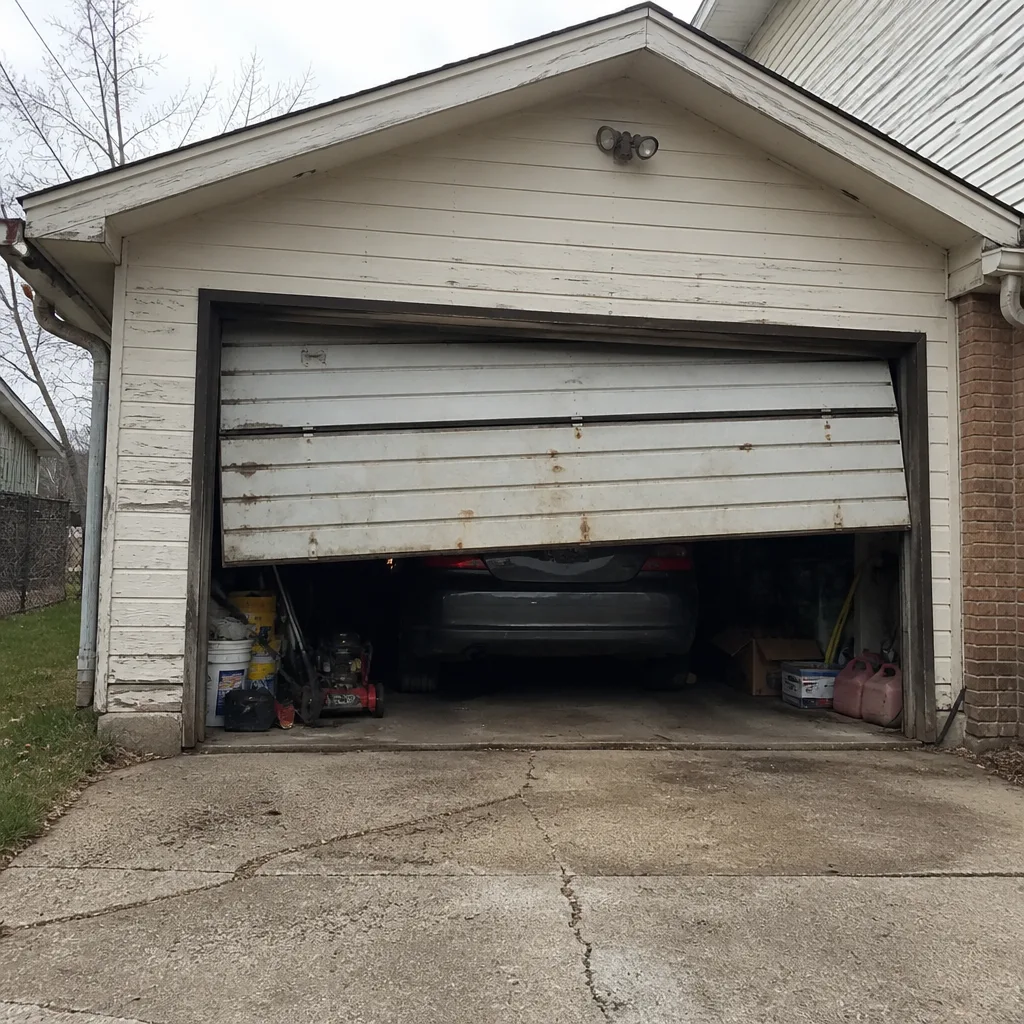
A gap at the bottom of the door, one side sitting lower than the other, is one of the most commonly ignored warning signs because it looks like weatherstripping. It rarely is. Weatherstripping wears and curls; a gap that changes sides, appears at one corner, or grows over a few weeks is the door no longer sitting square in its frame. That points to structure, hardware, or weight balance, and it’s worth taking seriously.
What an uneven gap usually means, in order from least to most serious:
- Track alignment drifting. One vertical track leans a touch off true, or the door is riding out of one track. That’s a realignment job and one of the few mechanical signs you can watch closely for a couple of weeks before acting.
- Hinge and roller wear. Worn hinges, flattened rollers, or a hinge pulling loose from the panel cause the door to sit unevenly. This is a track-and-hinge hardware issue, not a spring issue, and it tends to get worse slowly.
- Panel bowing or a bent section. Panels on older doors can bow with humidity; a bend at a hinge line is usually the result of a door being forced while something else was binding.
- A spring losing its lift on one side. With two torsion springs, one failing first causes a crooked door and a gap at the floor. That’s a stop-and-call, because the remaining spring is taking the full load.
Something else to be blunt about: a door with a gap at the floor isn’t just a draft problem. It’s an entry point for insects and rodents, a water intrusion path during a heavy Florence rain, and a way for the door to walk its weight into a weak track. And a gap on one side can let the safety sensors stay clear while the door is closing at an angle, which is exactly the condition you don’t want.
If the door is a Clopay or Wayne Dalton panel door in a Florence home, an uneven gap is often visible at the seams between panels before it’s visible at the floor. If you’re seeing a front gap, the fix starts with the track and springs, not the weatherstripping. If the door is uneven and it’s also starting to catch or reverse, stop using it and call us to talk it through. Our team can work with the brand you already have.
Reading the Noise: What Squeaks, Grinds and Pops Actually Mean
Noise is the most common reason people call us, and the hardest symptom to interpret over the phone. The same word – grinding, popping, squealing – can mean four different repairs depending on where it comes from. So here’s a plain-language map of what each sound most often indicates and how urgently it deserves attention.
- Squeak or squeal while moving. Usually lubrication or a worn roller. Rollers get flat spots, hinges dry out, and the door tells you about it. This is the monitor category, but dry rollers eventually wear bearings, and bearings eventually let a roller fall out of the track.
- Grinding at the ceiling unit. On a belt-drive LiftMaster or Chamberlain opener, a grinding sound is often a worn gear or a failing motor bearing. On a chain drive, it can be a chain that’s lost tension. Schedule it; a failing opener can run the door past its limits, which bends panels.
- Pop or bang from above the door. A torsion spring that’s slipping or a cable that’s jumped its drum. Treat as stop and call.
- Rattling and banging in the track. Loose hinges, a track that’s coming off its mounts, or a panel with a cracked stile. Schedule it, and inspect the track for visible gaps against the wall.
- Humming with no movement. The opener’s capacitor or motor is failing, or the door is jammed. Pull the manual release and test the door by hand. If the door moves and the opener hums, the opener is the problem.
- Clicking at the wall. Almost always the controller button or its wiring, not the door. That’s a small fix.
The thing we want Florence homeowners to hear in all of this: a new noise is information, not an emergency. What converts it into an emergency is a new noise plus one of the stop-now signs above, or a noise that’s getting worse session by session. A Raynor chain drive that grinds a little quieter or louder with the temperature is coasting on borrowed time; a Raynor that grinds and then stops moving halfway is telling you the operator has lost its limit settings.
If you’re not sure which of these you’re hearing, try recording it on your phone. The sound of a worn gear is quite different from the sound of a spring, and a short video gets us much closer to the right parts before anyone shows up. Compare that to a general repair call where the description is “it makes a bad sound” and you can see why the recording matters.
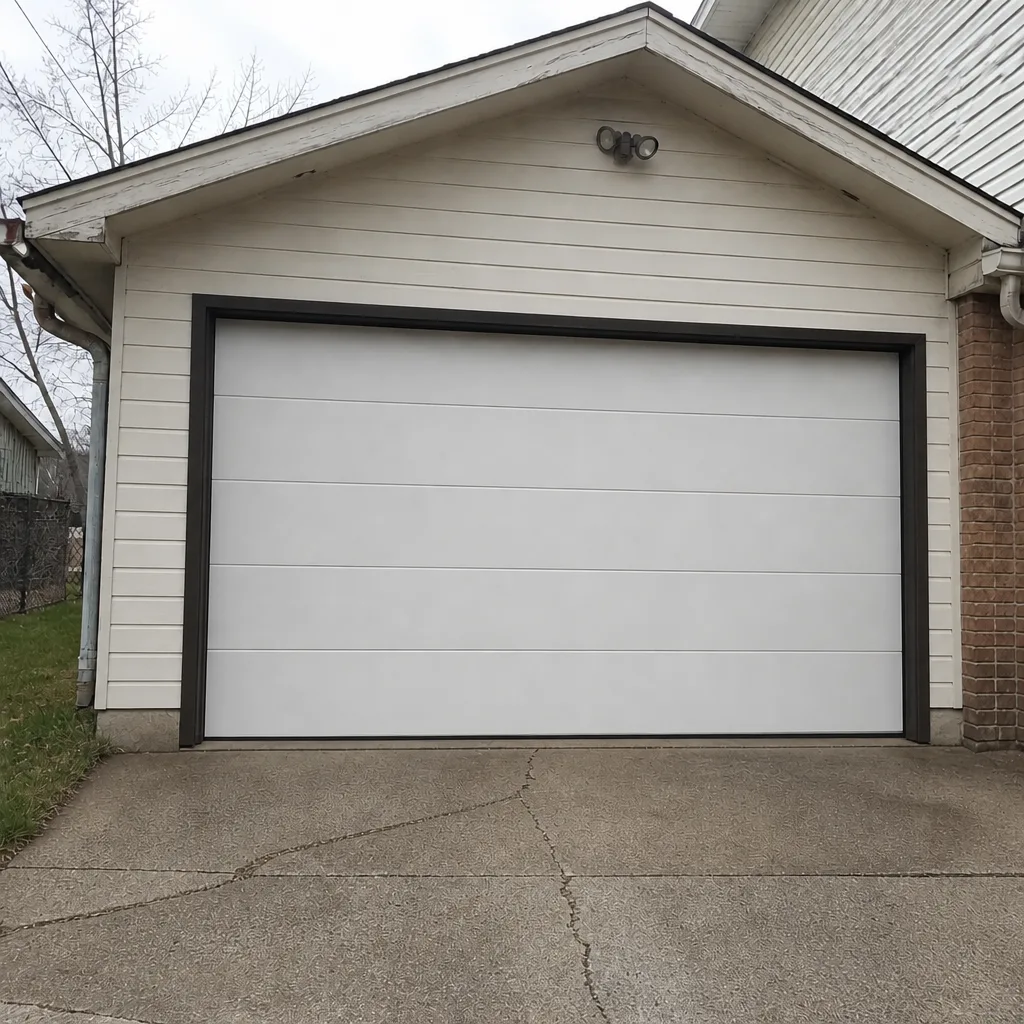
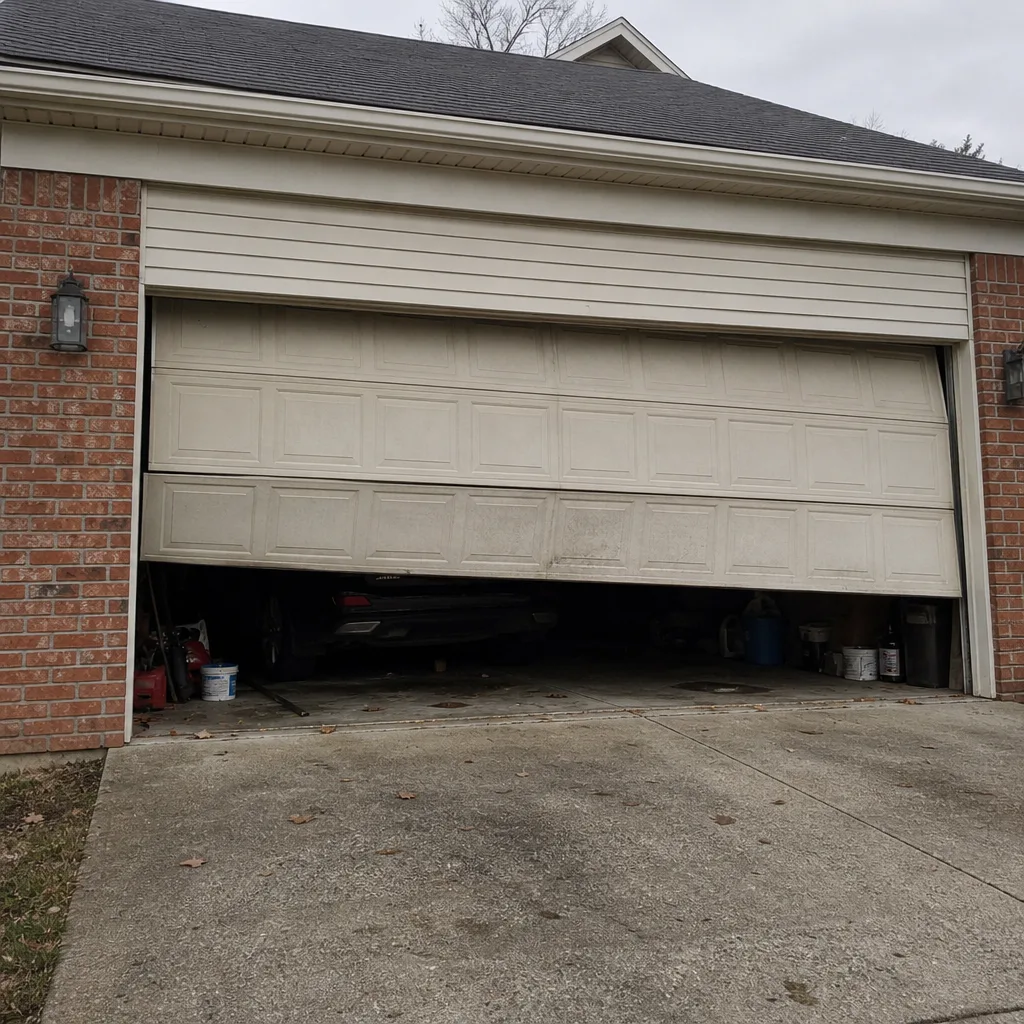
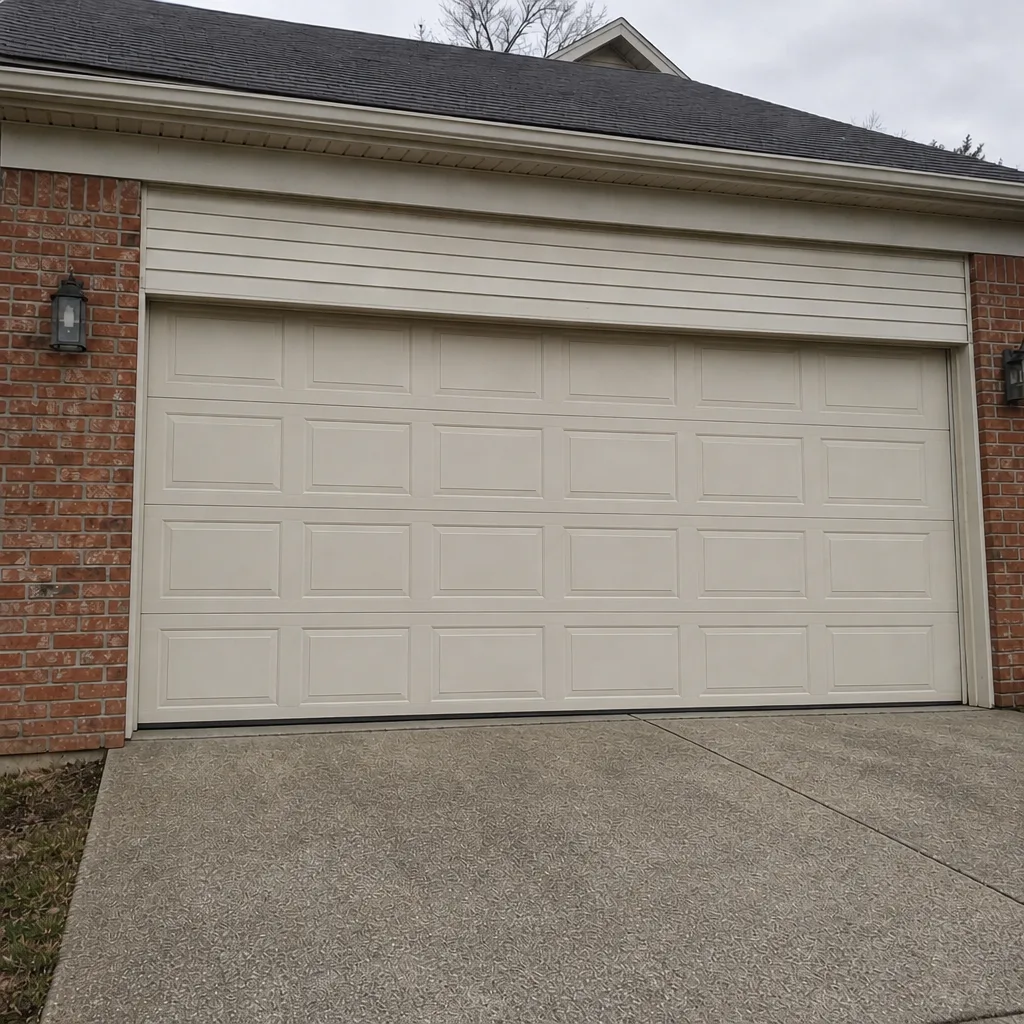
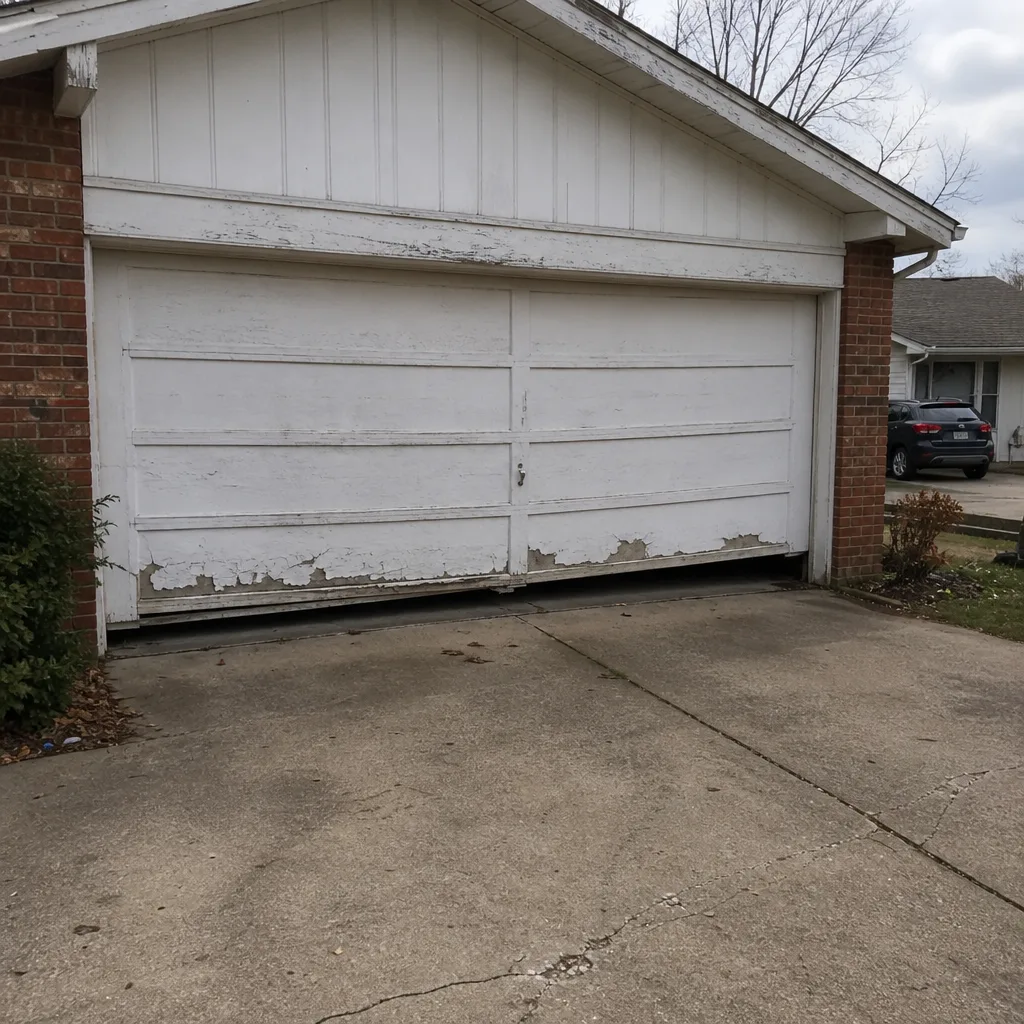
See the difference
 Before
 After
 Before
 After
 Before
 After
How to Document a Problem for an Accurate Estimate
One of the practical skills a Florence homeowner can build is documenting a garage door problem well enough that an estimate is accurate before anyone gets in a truck. That’s not about being technical; it’s about being specific. A description like “the door won’t close right” can mean four repairs with wildly different price ranges. A description with three specific facts usually narrows it to one.
Here’s a simple method that works for a phone estimate or an email:
- Photograph the whole door, open and closed. A wide shot taken from inside the garage, standing in the middle. Then one straight at the springs above the door, and one at each track from the bottom up to the drum. Don’t zoom in on the problem yet.
- Then take close-ups with a ruler in frame. A gap at the floor measured against a coin or a ruler is immediately diagnostic. A crack in a panel with a ruler next to it tells the technician whether it’s a repair or a replacement.
- Photograph every brand name and label you can see. The opener’s model plate is usually under the light lens or on the back. On the door, look for the manufacturer’s label on an interior panel edge. LiftMaster, Chamberlain, Genie, Craftsman and others are all distinguishable, and a Raynor or Amarr door’s model tells us whether a panel is still available.
- Note the door’s weight feel. Pull the manual release, lift the door halfway, and write down whether it’s light, heavy, or won’t stay up. That single fact tells us whether we’re looking at springs or weight balance.
- Log the timeline. Two weeks ago? Since the cold snap? Every time it rains? That pattern is diagnostic, especially the “every time it rains” answer in a Florence summer.
- Record the sound, 10 seconds. Phone video while someone runs the opener and someone points the camera at the opener and springs. The two positions covered in one shot is ideal.
Safety note that matters: photograph, don’t poke. Don’t pull springs, don’t untangle a cable to see it better, and don’t stand on a step ladder to reach the torsion bar. Take pictures from below, from a safe distance, with the door fully closed. If a spring is broken, photograph the gap from where you stand and leave it alone. A technician can always take a closer look with the right tool and the door controlled.
Good documentation also makes an emergency call easier. If your door won’t move and you need to secure the house, photos let you describe the problem in seconds and skip the phone back-and-forth. We answer 24/7, and a call outside dispatch hours is booked into the next opening, Sunday through Friday, 7am to 7pm, with crews dispatched from 7am to 7pm same-day.
A Simple Seasonal Check List for Florence Homes
Most of the warning signs in this guide can be caught before they become expensive if the door gets a short look twice a year. In Florence, the two useful checkpoints are late spring, before the heat and humidity settle in, and late fall, before the first hard freeze. Each check takes about ten minutes and needs no tools.
Do these, in order, with the door closed:
- Look at the springs and cables first. Walk the full width of the door and check for a gap in the spring coils, a curl, or a frayed cable. This is the single highest-value check on the list.
- Run the door and watch the gap at the floor. Watch it from inside with the door closed. Look for light or a visible gap on either side.
- Listen to the sound. New squeak means lubrication; new grind means opener or roller. Either way, you’ve located the problem before it located you.
- Test the safety reverse. Put a scrap of wood or a brick in the door’s path and close it. The door should reverse on contact. If it doesn’t, that’s a schedule-soon item.
- Balance test. Pull the manual release, lift the door halfway, and let go. It should stay where it is. If it drifts down or feels light, the spring balance is off.
- Look at the weatherstripping and the bottom seal. Cracked rubber is a cheap fix now and a water repair later. This is the one item you can safely monitor.
- Photograph the spring and opener labels. Same photo twice a year, same angle. Over a year or two you’ll have a real record of change, which is what makes a warning sign visible.
If you don’t want to do the checks yourself, that’s fine too. The point of the list is to keep the door from being a system you never look at until it fails. Most Florence homes run their door several times a day; that’s thousands of cycles a year across the springs. A twice-a-year look is cheap insurance against being surprised.
Common Mistakes to Avoid
- Assuming a grinding noise is always the opener. Half the grinding noises we hear in Florence come from the door or the track. Before you replace the motor, pull the manual release and check whether the door itself moves cleanly by hand.
- Pushing a door up by hand to “get it out of the way.” If the spring is gone, that door is much heavier than it looks and can slam shut on the way back down. A door that won’t move is a door you leave alone.
- Letting an uneven floor gap ride for the season. It looks cosmetic; it rarely is. A crooked door wears its track and rollers faster and can trip its own safety sensors unexpectedly.
- Treating a broken spring as a one-spring job when the door has two. On a two-spring door, the springs are matched and sized as a pair. When one fails, the other is running on borrowed time and both usually go at the same time. Ask for the pair price before you commit.
- Lubricating the wrong parts. Oil on a cable or on the spring is a mistake. The cables and springs are meant to run dry-ish; the rollers and hinges are the parts that want lubrication. If you’re not sure which is which, ask.
- Assuming the opener brand is the whole system. Your Craftsman or Chamberlain opener and your door are two different pieces of equipment from two different makers, and a failure in one doesn’t tell you much about the other. A technician should be able to look at both in one visit.
- Testing a door that has already shown a stop-sign symptom. If the spring has a visible gap or a cable is frayed, don’t run the door to “see what it does.” You already know.
When to Call a Professional
Call a professional the moment you see a broken spring, a frayed cable, a door hanging crooked, or a door that drops or reverses unpredictably. Those are the signs that can cause injury or a more expensive repair if you keep using the door. Call us promptly for grinding, a door that won’t balance, an uneven floor gap that’s worsening, or an opener that hums without moving. And call when you’re simply not sure. A quick phone conversation often sorts a five-dollar fix from a five-hundred-dollar one.
Florence Garage Door Repair Pros offers free estimates in Florence – call (844) 681-4337. We answer 24/7, and fast dispatch from 7am to 7pm, Sunday through Friday, keeps a same-day repair within reach for a door you can’t safely leave open. Our technicians have up to 11 years of experience, we’re certified to service 8 major brands including LiftMaster, Chamberlain, Genie, Clopay, Amarr, Wayne Dalton, Craftsman and Raynor, and we handle the whole scope under one roof: repair, opener repair, spring repair, and new installation. Call for a free estimate and we’ll talk you through what you’re seeing before you decide anything.
Frequently Asked Questions
Look for a visible gap between coils, a coil that’s lost its even spacing, or a spring that looks longer, sagging or slightly unwound compared with its partner. Cables fraying at the drum and a door that suddenly feels light when you lift it by hand are also signs. These are the cues to stop using the door and call for a look. In Florence’s humid summers and cold snaps, springs often show these signs before a break, so a twice-a-year visual check is time well spent. We can look at them with a free estimate.
Only if the door moves evenly and the noise is a squeak rather than a grind, and only while you’re arranging a repair. A grind from the opener can tear up the gear; a grind from the door can mean a roller or track problem that gets worse. Either way, the cost of ignoring it tends to grow. If the grinding is accompanied by a crooked door or a reversal, stop using it. Call (844) 681-4337 for an exact quote, estimates are free.
That usually means the door isn’t sitting square, which points to track alignment, worn hinges and rollers, a bent panel, or one spring losing lift on a two-spring door. It’s not just a weatherstripping issue. The good news is that the cause is usually visible and fixable. The bad news is that an uneven door wears out faster and can affect the safety sensors. If the gap is changing sides or getting bigger, that’s a schedule-soon item even if the door still opens.
Often yes for repair work, especially when a spring, cable, opener or track has failed and the door can’t be left in place. We offer same-day service where the schedule allows, with fast dispatch from 7am to 7pm, Sunday through Friday. Installation and full door replacement work differently: that’s a measure-and-order job, so you’ll get a free measure and a written price rather than a same-day promise. We answer 24/7 for anything urgent.
No. The price you agree in the written estimate is the price you pay, and the price is quoted and agreed before any work starts. The point of documenting the problem clearly – photos, a sound recording, and a note on whether the door feels heavy – is to get the estimate right the first time. If something changes on site that you couldn’t have seen from the phone, we’ll tell you and get your approval before doing the work. Call (844) 681-4337 for a free estimate.
The local professionals we connect you with are licensed and insured as their state requires, and they can work on the brand you already have. We’re certified to service 8 major brands, including LiftMaster, Chamberlain, Genie, Clopay, Amarr, Wayne Dalton, Craftsman and Raynor. That covers nearly every system in a Florence home, so there’s no need to hunt down a separate installer or a brand-specific dealer. Call (844) 681-4337 and tell us what you have; we’ll take it from there.
The Bottom Line
Warning signs only help when you know what they’re warning you about. Broken springs, frayed cables, a crooked door and unpredictable reversing are stop-now; grinding, an unbalanced door, and a growing floor gap are schedule-soon; squeaks, worn seals and remote issues are monitor. The climate in Florence makes all of these show up a little sooner, so a twice-a-year look and a clear photo record will catch most problems before they’re expensive. When in doubt, describe what you’re seeing and let a specialist confirm. Garage door spring repair is not a do-it-yourself job, and you don’t need to figure it out alone. For help with your garage door in Florence, take a look at our garage door repair page and the rest of our site at Florence Garage Door Repair Pros, or call us for a free estimate. We work on your schedule and answer the phone when the door stops. Call (844) 681-4337. We answer 24/7. Fast dispatch from 7am to 7pm, Sunday through Friday.
Written by the team at Florence Garage Door Repair Pros.