
Top Signs You Need Garage Door Service – Don’t Ignore These
If your garage door has gotten louder, slower, or a little uneven and you’re hoping it’ll just sort itself out, it won’t. Those early symptoms are diagnostic clues, and each one points to a specific mechanical problem with its own level of urgency. Paying attention now is how you avoid a full failure later. A slightly louder door isn’t aging gracefully; it’s telling you which part is wearing out. If you’d rather not crawl around a suspended door frame with a level, call (844) 681-4337 and we’ll take a look.
Key Takeaways
- Different sounds point to different failures: grinding, squealing, banging, and stuttering each mean something specific.
- A two-dollar balance test tells you more about your door’s health than any visual guess.
- Cables fray at the drum wrap, not the middle. Springs lose tension before they snap.
- Some signs can wait a week. Some mean stop using the door today. We’ll help you tell the difference.
What Do the Different Garage Door Noises Actually Mean?
Every noise your door makes is a symptom pointing to a specific component, and the type of sound tells you where to look. Grinding, squealing, banging, and stuttering each have a known cause and a different urgency level. Here’s how we map them in our experience:
- Grinding usually means gear or trolley wear. On a chain or belt opener, a worn drive gear or a trolley that’s losing its grip will grind as it moves. Left alone, a stripped gear can stop the door mid-travel.
- Squealing is nearly always dry rollers or hinges. Metal on metal with no lubrication squeals. It’s often the easiest fix and the most ignored.
- Banging points to loose hardware or unbalanced spring tension. A door that bangs at the end of travel is telling you the springs aren’t carrying their share of the weight.
- Stuttering or jerking suggests a limit switch or logic board issue in the opener. The motor doesn’t know when to move smoothly, so it moves in steps.
That grinding sound deserves special attention because it often comes from the opener rather than the door itself. When the problem lives inside the motor unit, that’s a job for garage door opener repair, and it’s worth catching before the unit fails entirely. We service openers from Genie, LiftMaster, and Chamberlain among the eight major brands we’re certified on, so the unit you already own is the one we work on.
The Two-Minute Balance Test Every Florence Homeowner Should Know
A door that closes smoothly can still be badly out of balance, and an unbalanced door is the single biggest cause of opener failure. Here’s the test. Close the door, pull the emergency release so the door is on manual, then lift it halfway by hand and let go. A balanced door holds its position. A door that slams down or drifts up is carrying too much weight on one side or the springs are losing tension.
Why does this matter? Your opener is designed to lift a balanced door. When the springs stop carrying their share, the opener carries it instead, and it wasn’t built for that. The door might open fine for months while the opener motor works harder than it should. Then one morning it just quits. An unbalanced door isn’t a door problem; it’s an opener-killer hiding in plain sight.
We bring this up because homeowners in Florence tend to notice the door still working and assume everything’s fine. If the balance test fails, that’s a sign to get it looked at before the opener pays the price. Handling that properly is garage door spring repair territory.
What Worn Cables and Weakening Springs Look Like
Cables don’t wear where you’d expect. Fraying almost always starts at the drum wrap, the point where the cable coils around the drum at the top of the door, not in the middle where it’s easy to see. Look up at the drums: a cable with broken strands starting to separate there is on its way out even if the rest looks fine. A snapped cable is a sudden, loud event, and it’s worth catching the fray before it gets there.
Springs are subtler. A torsion spring losing tension presents as a door that feels heavier, rises more slowly, or doesn’t hold position in the balance test. You won’t always see a gap in the coil before it fails. What you’ll notice is the behavior change.
Here’s the part that matters: springs are under extreme tension even when the door is closed. Trying to adjust or replace one without the right winding bars and training is one of the most dangerous things a homeowner can attempt. This is a job for a trained professional. We treat spring work as a named specialty for exactly that reason. If your door is slow, heavy, or the balance test fails in Florence, don’t touch the springs yourself. Call us and let a technician handle it.
Why Weather Seals Fail Faster in Florence’s Climate
Kentucky’s humid summers and cold winters are hard on weather seals, and a cracked seal can go from cosmetic to structural. The bottom seal and the side and top seals keep water, air, and pests out. When they dry out and crack in summer heat and then shrink in winter cold, the seal stops doing its job. The result is water intrusion at the door threshold, and over time, moisture at the bottom of the door can work its way into the track area.
So when is a cracked seal cosmetic and when is it causing real damage? A seal with surface cracks that still sits tight against the floor is cosmetic. Schedule it when convenient. A seal that’s separated from the door, leaving visible gaps or letting daylight through at the bottom, is letting moisture in and can lead to track issues. That one moves up the priority list.
If your tracks start to warp or pull away from the jamb, the problem has moved past the seal. That’s when you want garage door repair rather than a new strip of rubber. We see this pattern often enough in Florence to check the seals whenever we’re on a repair call, because a seal replaced early saves a track repair later.
Which Signs Mean Wait, Which Mean Stop Using the Door Today
Not every symptom carries the same urgency, and knowing which bucket a sign falls into keeps you from either panicking or procrastinating. Here’s the straightforward framework we use:
Schedule when convenient
- A squeal that comes and goes; the door still moves smoothly.
- Surface cracking on a weather seal that still seals.
- A single roller that’s noisy while everything else is quiet.
Call within the week
- Grinding from the opener that’s getting more consistent.
- A balance test that fails; the door won’t hold position.
- A door that closes unevenly or reverses for no clear reason.
- Fraying cable visible at the drum wrap.
Stop using the door today
- A loud bang followed by a door that won’t lift; a spring has likely failed.
- A snapped or hanging cable.
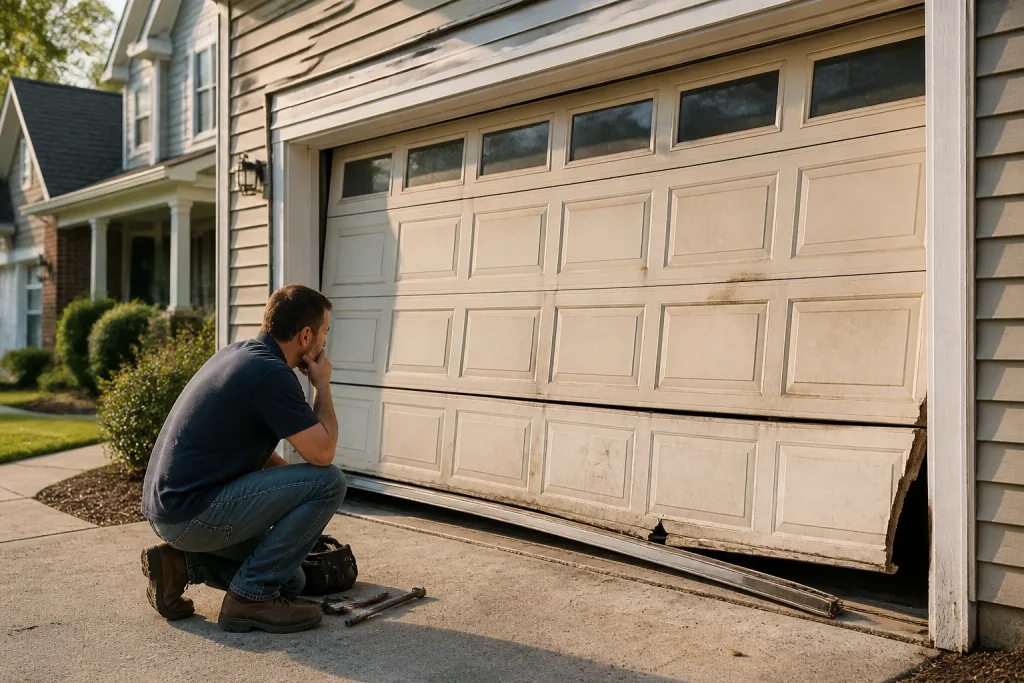
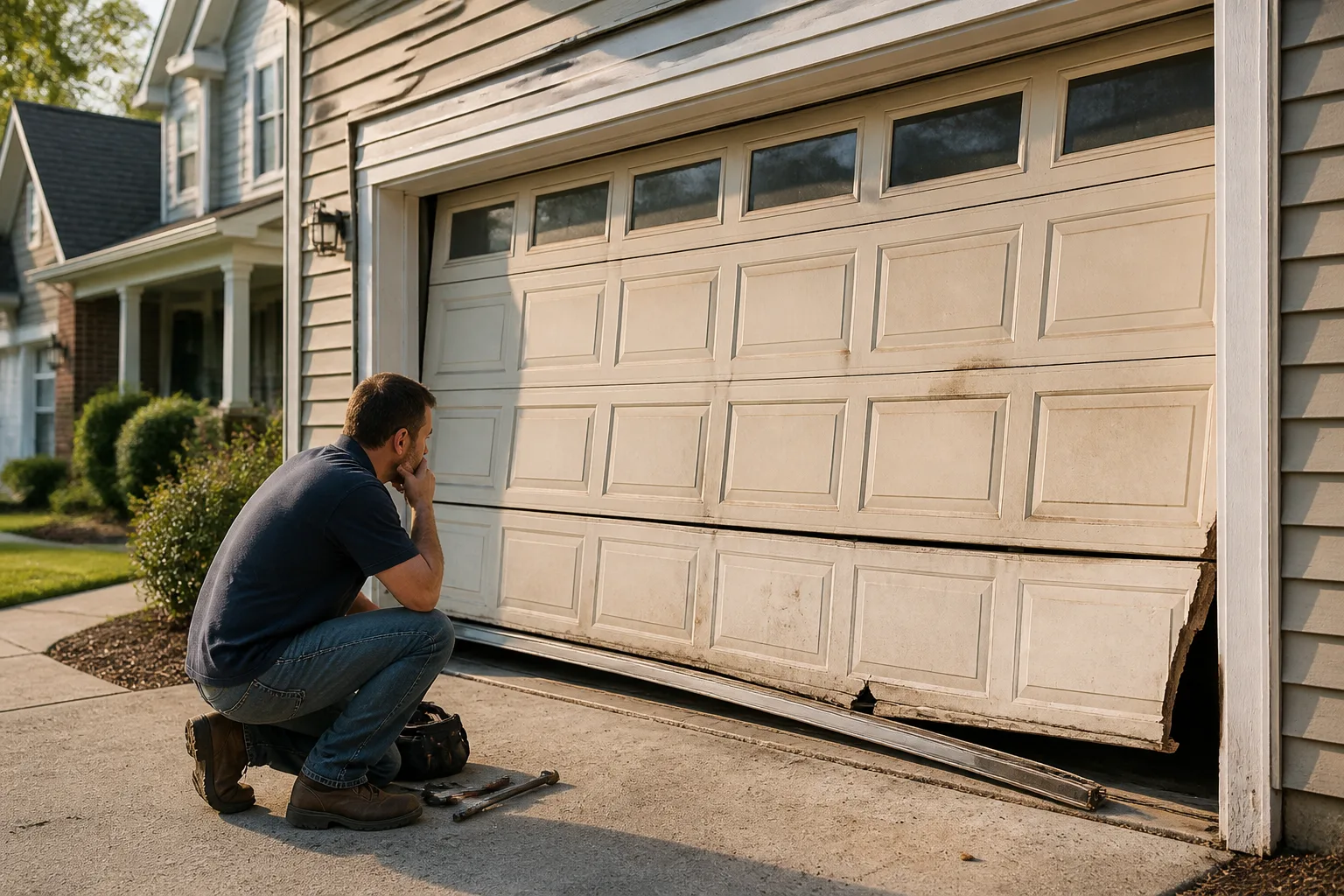
- A door that’s come off its tracks or is visibly crooked.
- Any situation where the door won’t stay up on its own.
In the stop-using-it cases, don’t run the opener to “see if it works.” A door with a failed spring under an active opener can do real damage. If your door won’t move, that’s exactly when you want emergency service rather than a wait until next week.
When to Call a Pro
Some checks you can do yourself: listen, look, run the balance test. But anything that involves springs under tension, cable replacement, or tracking down an opener fault is worth handing to someone who does it every day. Our technicians have up to 11 years of experience and are certified to service Genie, Clopay, Amarr, Wayne Dalton, and the rest of the eight major brands. We answer 24/7, with fast dispatch from 7am to 7pm, Sunday through Friday, and we can work with your insurer where needed. We keep it simple: the price is quoted and agreed before any work starts, so you know the number before we touch the door.
Related services in Florence: if you’ve spotted signs that point to a specific fix, we can help with garage door repair, opener issues, spring work, or a full replacement when repair no longer makes sense.
The Bottom Line
Your garage door rarely fails without warning. It gets loud, it drifts, it slows down, and each of those is a clue pointing to a specific part. Run the balance test, look at your cables at the drum wrap, and sort what you find into wait, this week, or today. One honest note: if your door is howling like a haunted house every time you open it, that’s not a ghost, that’s a dry roller, and it’s telling you something. If you’re in Florence and need help sorting it out, Florence Garage Door Repair Pros offers free estimates. Call (844) 681-4337. We answer 24/7, with fast dispatch from 7am to 7pm.
Frequently Asked Questions
A door that won’t hold position on the balance test, a snapped or frayed cable, or a loud bang followed by a door that won’t lift all mean stop using the door and call a professional. Those point to spring or cable failure, which is dangerous to handle yourself. Call (844) 681-4337 for an exact quote. Estimates are free.
Squealing and grinding don’t fix themselves, and ignoring them usually turns a smaller repair into an opener replacement. A noisy door that still works is still telling you which component is wearing. It’s worth a look before it fails completely.
Pull the emergency release, lift the door halfway by hand, and let go. A balanced door holds its position. One that drifts up or drops down is out of balance and putting extra strain on your opener. That’s a sign to get it checked.
Very likely. We’re certified to service eight major brands, including Genie, LiftMaster, Chamberlain, Clopay, Amarr, Wayne Dalton, Craftsman, and Raynor, which covers nearly every residential system. We work on the equipment you already own rather than pushing a replacement. Call (844) 681-4337 to confirm your make and model.
Written by the team at Florence Garage Door Repair Pros.
Need Garage Door Help?
Call Florence Garage Door Repair Pros - the local pro we connect you with is licensed and insured, here with fast help in Florence.
(844) 681-4337