
Last updated November 22, 2026
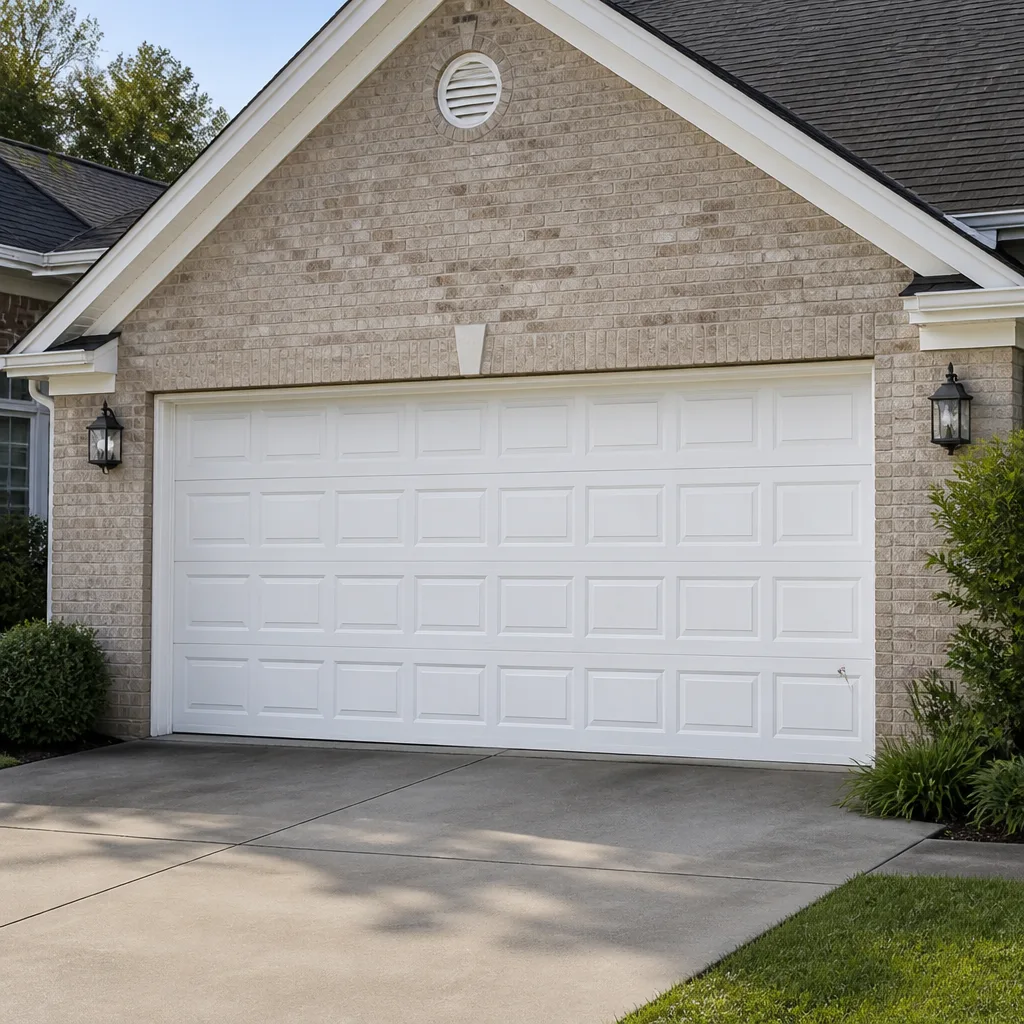 Raised-panel steel
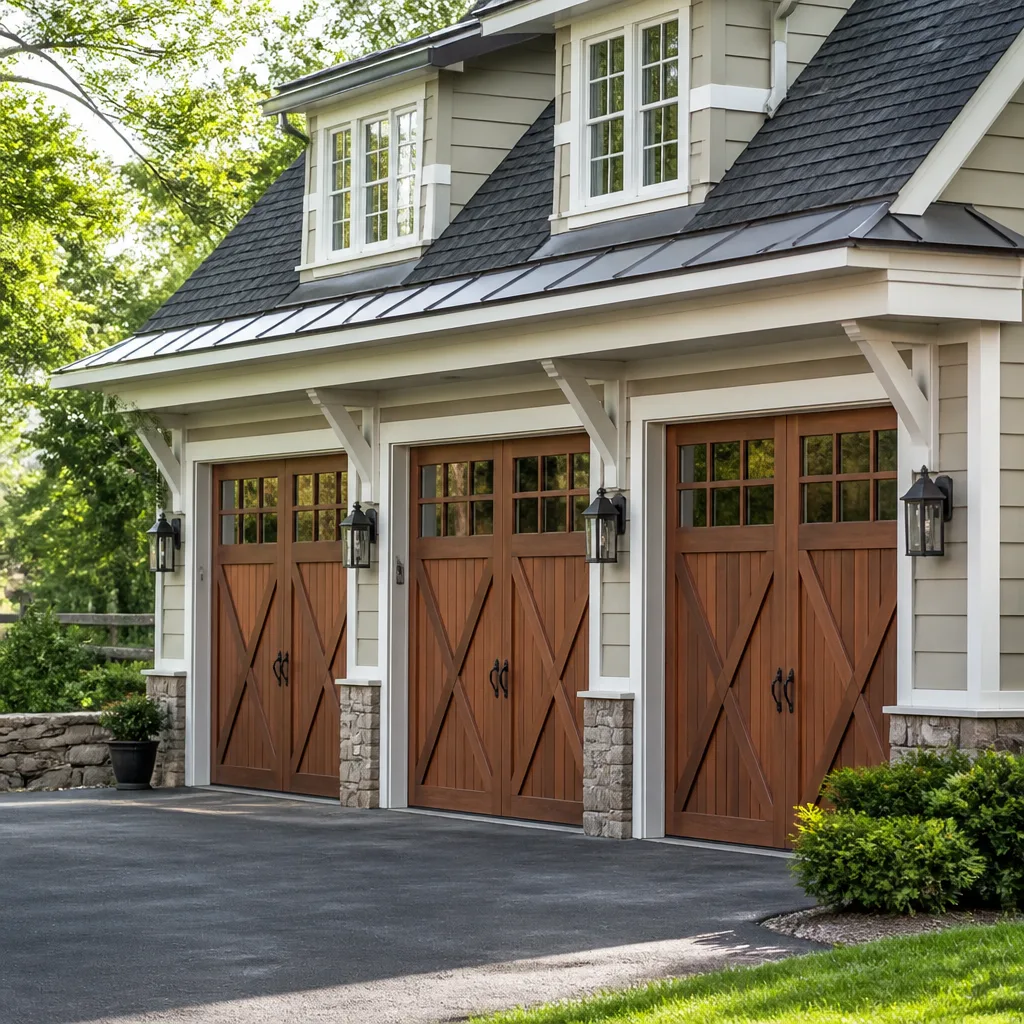 Carriage house
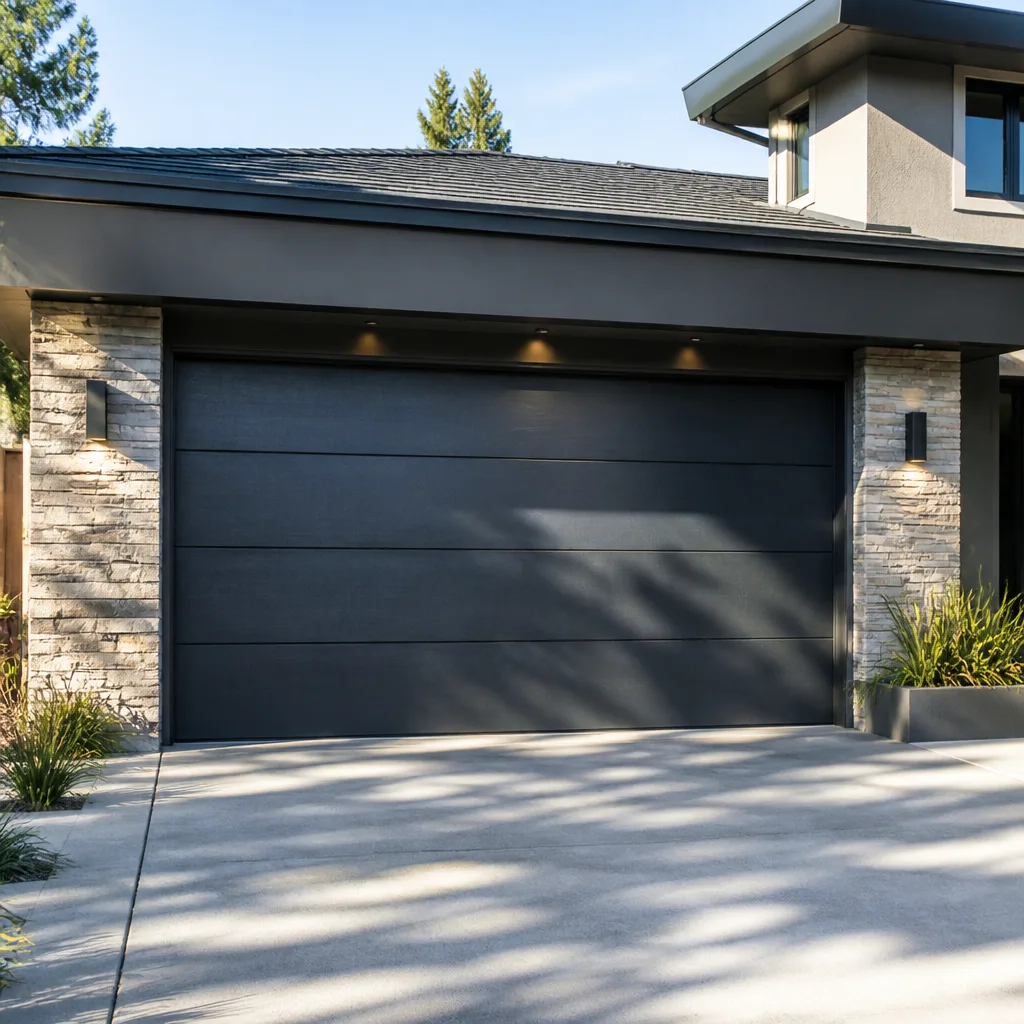 Modern flush
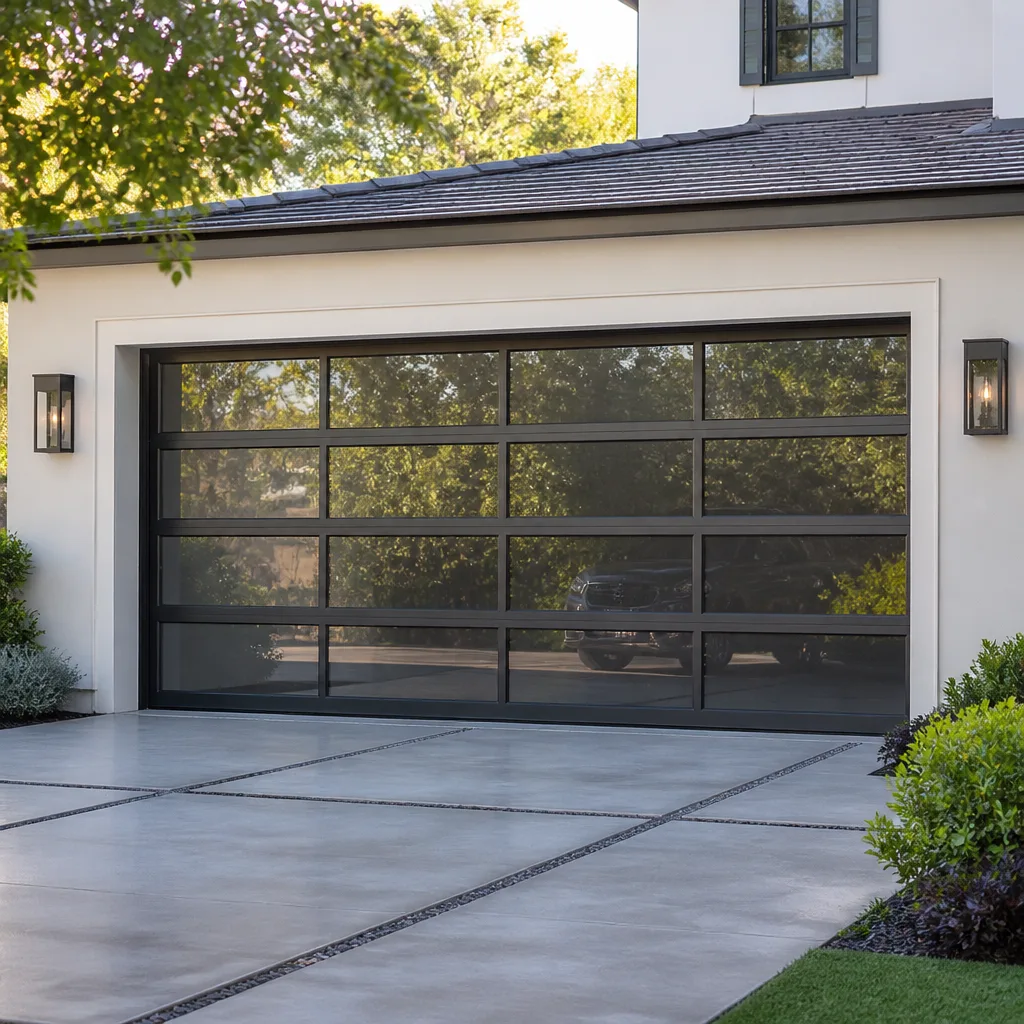 Full-view glass
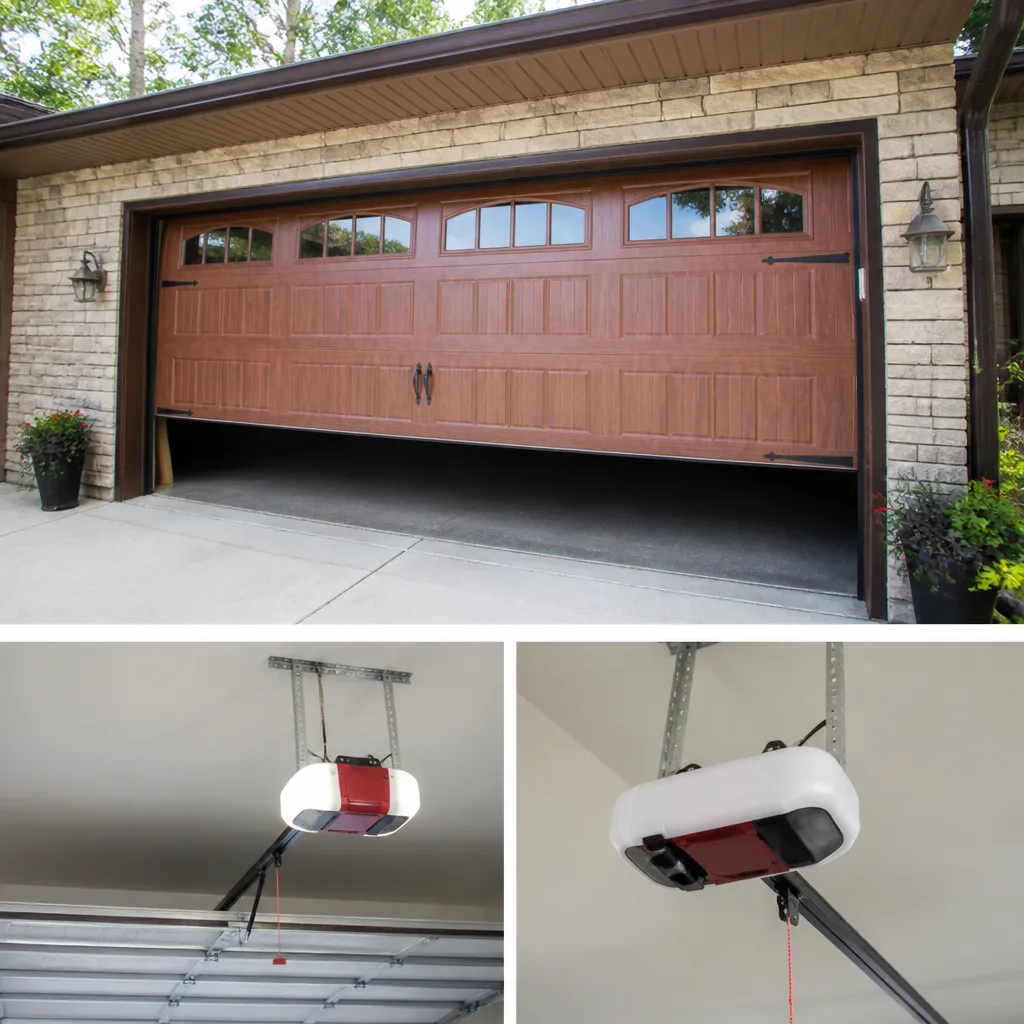 LiftMaster openers
 Chamberlain openers
Full 25-point door and opener safety check with every visit - springs, cables, rollers, tracks, and your LiftMaster or Chamberlain opener included
You get a price before we start. It does not change when the pro arrives.
Get your free estimateDIY vs Professional Garage Door: The Florence Homeowner’s Decision Guide
A torsion spring the size of your forearm can hold enough stored energy to break a wrist or worse. That’s not because homeowners are careless. It’s because the only tool that safely controls that tension, a proper winding bar, costs roughly $80 and isn’t sitting on a shelf at the local hardware store. Meanwhile, the tasks that look scary on video (replacing a bottom seal, re-pairing a remote, straightening a bent track bracket) are genuinely manageable for a careful homeowner with a Saturday morning and a socket set. This guide draws the line by component instead of by gut feeling, so you know which jobs in your Florence garage are safe to try and which ones should go to a trained technician.
Quick Answer
Safe DIY garage door tasks are limited to the low-tension parts: seals, rollers, remotes, batteries, photo-eye alignment, lubrication, and visual inspection. Anything involving torsion springs, extension springs, cables, the bottom bracket, or the opener’s internal gearing is professional territory, and that’s not a sales pitch; it’s where the injury and warranty risk lives. In Florence, most homeowners end up calling a pro for spring, cable, and opener work, and handling lubrication, seal replacement, and diagnostics themselves.
Styles & brands we work with
- Raised-panel steel
- Carriage house
- Modern flush
- Full-view glass
- LiftMaster openers
- Chamberlain openers
Table of Contents
- Where the DIY line actually sits
- Tasks that are genuinely safe for homeowners
- Tasks that are not, and the specific reason for each
- What DIY work does to warranties and insurance in Kentucky
- DIY parts vs. professional cost for the five most common repairs
- How to diagnose the problem yourself before you call
- HOA restrictions in Florence and how they affect the work
- How Florence’s climate and seasons shape the decision
Where the DIY Line Actually Sits
The DIY-versus-professional question for garage doors gets answered wrong constantly because people frame it as skill. “Are you handy enough to fix this?” is the wrong question. The right question is: does this specific component store mechanical energy in a way that releases violently, or does it sit at rest once you understand how it moves?
A torsion spring mounted on the wall above the door and an extension spring running along the horizontal track both do the same job: they counterbalance the door’s weight so a 150-pound panel feels like 15 pounds in your hand. To do that, they’re wound or stretched far past their resting length and held there under extreme tension. That tension doesn’t care whether you’re a plumber, an electrician, or an accountant. When it lets go through the wrong angle, the result is a fracture, a laceration, or a door panel crashing down.
Everything else on the door system is a different story. Hinges, rollers, seals, brackets, photo-eyes, remotes, and the opener’s circuit board live at low or zero stored tension. That’s where the safe DIY zone ends and begins in Florence homes, and it’s the same boundary whether the door is a Clopay steel raised-panel or an Amarr carriage-house model.
Here’s the practical split we’ve seen hold up on thousands of Florence doors:
- Energy-storing components (torsion springs, extension springs, lift cables, bottom bracket, cable drums): professional only.
- Force-transmitting components (opener gearing, opener rails, chain and belt assemblies): professional for adjustments and repairs, DIY for inspection.
- Passive components (rollers, hinges, weather seals, photo-eyes, remotes, wall buttons, batteries): safe for a careful homeowner.
- Structural components (panels, tracks, header brackets, jamb brackets): mixed; depends on the specific repair.
If you’re looking at a task and you can’t confidently place it in one of those four rows, that’s your answer. Call a pro. For a broader view of what falls under garage door repair in this area, we’ve laid out the scope elsewhere on the site.
Tasks That Are Genuinely Safe for Homeowners
These are the jobs where a careful Florence homeowner with basic tools can save real money and get a satisfying result. None of them involve stored tension or electrical risk inside the opener housing.
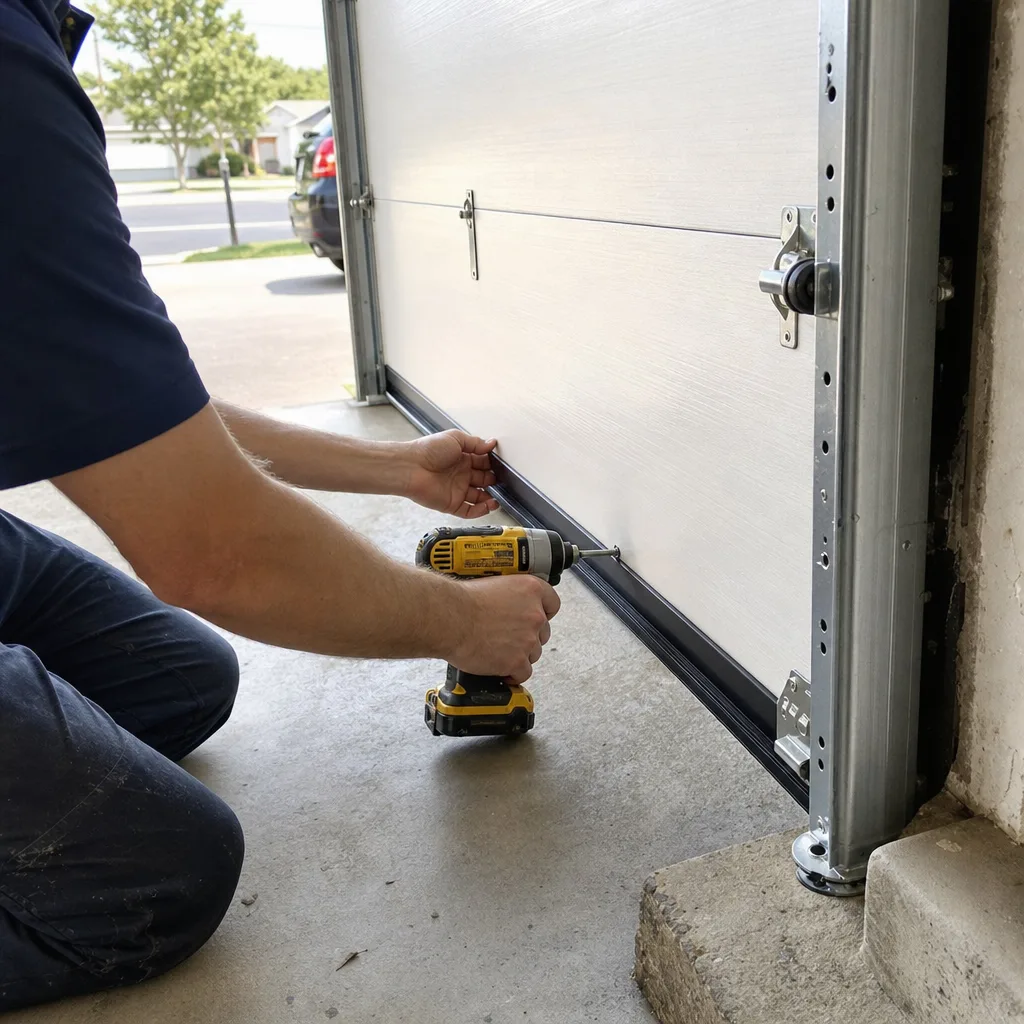
Weather seal and bottom rubber replacement. The bottom seal is a rubber strip that slides into a channel on the door’s bottom panel, held by friction or a couple of screws. Pull the old one out, clean the channel, slide the new one in with a little silicone spray. This is one of the highest-value DIY jobs because a worn bottom seal is the number one cause of drafts, water intrusion, and pest entry in Florence garages.
Roller replacement. With the door fully open and the opener disconnected (pull the release cord first), rollers slide out of their hinge carriers. Nylon rollers last longer and run quieter than steel. Budget 20 minutes for a single roller swap, an hour for all of them.
Photo-eye alignment and cleaning. The two small lenses mounted near the floor on each side of the door. A cobweb, a leaf, or a shifted bracket breaks the beam and the door reverses. Wipe the lenses, check that both are aimed at each other, and test by placing your foot in the beam with the door closing. It should reverse.
Remote and keypad pairing. Every opener brand has its own procedure, but they’re all documented in the manual or online. Fresh batteries solve more “dead remote” complaints than anything else.
Lubrication. A silicone-based spray on hinges, rollers, and the torsion bar (not on the tracks) quietens a door noticeably. White lithium grease works on the opener screw drive if you have one. Wipe off old grime first.
Visual inspection with the door closed. Look at the springs for gaps (that’s a break), check the cables for fraying near the bottom corners, and see if the door looks level across the top. This is the diagnostic pass that tells you what to call about.
For an opener that’s behaving oddly after these steps, it’s worth understanding the difference between a remote issue and a logic board problem. That’s covered in more depth on our garage door opener repair page.
Tasks That Are Not, and the Specific Reason for Each
This is the list that matters. Each item here has a specific physical reason it isn’t a beginner’s job, and none of those reasons has anything to do with your intelligence or mechanical aptitude.
- Torsion spring replacement. The spring is wound to hundreds of pounds of torque during installation and stays there for years. To remove or install one you have to release that stored wind with a winding bar through the winding cone, and if the bar slips the cone spins freely. That’s the injury risk. There’s also a balance risk: a spring wound to the wrong count makes the door dangerously heavy or causes it to slam.
- Extension spring replacement. Same principle, different geometry. Extension springs stretch along the horizontal track and are usually backed up by safety cables for a reason. When they break, the spring shoots toward the wall. Installing a new one means stretching it to length under load, and doing that safely requires proper clamps and cables.
- Cable replacement or re-clamping. The lift cables run from the bottom bracket up across the drums and connect to the springs. They’re under continuous tension. A cable that slips while you’re working on it releases the door’s balance suddenly. Re-clamping a frayed cable with a hardware-store crimp is not the same as installing a properly swaged, correctly tensioned cable.
- Bottom bracket work. The bottom bracket is the metal corner where the cable attaches to the door panel. It’s held under cable tension at all times. Any repair touching it puts your hand near stored energy.
- Opener gear and logic board replacement. The opener housing contains capacitors that hold a charge after the power is off. Replacing the drive gear, the travel limits module, or the logic board means working around that. It’s a job for someone who does it regularly.
- Track straightening with a pry bar. A bent vertical or horizontal track looks easy to nudge back into place, but the door’s rollers have to stay engaged in the track at all times. Prying a loaded track can drop the door off its rollers and onto whatever is below.
- Full panel replacement on a sectional door. Replacing a single panel requires releasing tension from the springs to safely separate the section from the hinge line. Same energy problem, plus alignment risk.
If any of those describes your situation, stop and call a specialist. Spring work in particular is where we see Florence homeowners get hurt trying to save on labor. There’s a reason garage door spring repair is treated as its own specialty in the trade: it is the most mechanically dangerous job on the entire door system.
What DIY Work Does to Warranties and Insurance in Kentucky
This is the section most homeowners never think about until something goes wrong, and it’s the strongest non-safety reason to leave certain jobs to a pro.
The manufacturer’s warranty and the labor warranty are two different things. A door manufacturer like Clopay or Amarr warrants the panels and hardware against defects. That warranty is void if the door was installed or repaired incorrectly, and spring failures attributed to improper work are the classic example. An opener brand like LiftMaster, Chamberlain, or Genie does the same thing: their warranty covers the unit as designed and installed, not as modified by the homeowner with a replacement part sourced online. If you’re unsure whether a part is a factory part, the safest bet is to have it sourced and installed by a technician who works with the brand.
Your homeowner’s insurance is a separate issue entirely. Most Kentucky homeowner’s policies are written to cover damage to the home and liability for injuries to others. What they typically exclude is damage caused by faulty workmanship. So if a DIY spring installation fails and drops the door, or a garage door comes down on someone because of a bad tension adjustment, the resulting damage isn’t automatically covered. We can’t tell you what your specific policy says; that’s a question for your agent. But it’s worth a phone call before you start a job where a failure means injury or structural damage.
The do-it-yourself grey zone. Seals, rollers, remotes, and photo-eyes don’t touch the warranty. Springs, cables, brackets, and opener internals do. The general rule is: if the manufacturer specifies a torque spec, a spring wind count, or a professional installation for the part, that’s your cue.
None of this means DIY is a bad idea. It means the tradeoff for a $60 seal kit is fine, and the tradeoff for a $40 online spring is not.
DIY Parts vs. Professional Cost for the Five Most Common Repairs
Here’s where the DIY savings are real and where they aren’t. The figures below are typical estimates for the Florence market; the written estimate from the technician is what sets the final price. DIY numbers reflect parts purchased separately, before shipping or any tool you don’t already own.
- Bottom seal replacement. DIY: roughly $25 to $50 for the seal and silicone spray. Professional: typically $120 to $220 installed. DIY saves money here if the channel is intact.
- Roller replacement (full set). DIY: $30 to $60 for nylon rollers. Professional: typically $140 to $240 installed. DIY is fine if you’re comfortable pulling the door release cord.
- Opener repair (gear or board). DIY: $30 to $120 for the part, plus shipping and time spent chasing the right revision. Professional: typically $180 to $380 for repair, more if the opener is replaced. This is where DIY savings disappear fast if the wrong part gets ordered.
- Spring replacement (one torsion spring). DIY: not recommended. Professional: typically $180 to $340 for one spring; a matched pair is usually replaced together and costs about twice that. There’s no DIY savings recommendation here because the tooling, tensioning, and injury risk don’t offset the difference.
- Cable replacement. DIY: not recommended. Professional: typically $150 to $300, depending on the door and how much needs to come apart.
The pattern is consistent: low-tension parts, DIY saves 40 to 60 percent of the professional cost. High-tension parts, the savings are small relative to the risk, and a re-do after a failed DIY job costs more than going straight to a pro. For a broader sense of what other Florence homeowners are quoted, our overview of Florence Garage Door Repair Pros is a good starting point.
How to Diagnose the Problem Yourself Before You Call
A good diagnosis is worth real money off your bill, because it turns a service call into a targeted repair. Florence homeowners who can describe the symptom accurately tend to get faster quotes and fewer return visits. Here’s a 6-step diagnostic pass you can run in ten minutes with the door closed and the opener disconnected. No tools beyond a flashlight.
- Listen before you look. A single loud “bang” from the middle of the door typically means a spring broke. A grinding or rhythmic clicking usually points to opener gears or a worn roller. Rattling over the whole door is usually loose hardware.
- Look at the springs. With the door closed, shine the light at the springs above the door. A torsion spring should look like a continuous coil; a visible gap of an inch or more means it’s broken. Extension springs along the horizontal track should look tightly coiled with safety cables routed through them; a separated spring is a break.
- Check the cables. Both lift cables should be straight, snug, and free of fraying. A cable that looks slack on one side or bunched at the drum is a red flag.
- Test the balance. With the door released from the opener (pull the red cord), lift the door halfway by hand and let go. It should stay roughly where you left it. If it slams down or the motor won’t lift it, the springs have lost their tension.
- Test the safety reverse. Close the door with the opener. As it’s coming down, put a foot in the beam of the photo-eyes. The door should reverse. Lay a 2×4 flat in the path and lower the door; it should reverse when it hits the board. If either test fails, that’s a safety issue, not a convenience one.
- Check the wall button and remote together. If the wall button works and the remote doesn’t, it’s a remote or receiver problem. If neither works but the opener light comes on, you likely have a logic board or safety sensor issue. If nothing happens at all, it could be power, the wall button wiring, or the opener itself.
Write down what you find. When you call, “the door slams down when I release it and there’s a gap in the left spring” gets you a much faster answer than “it doesn’t work.”
HOA Restrictions in Florence and How They Affect the Work
Florence has a growing number of neighborhoods with homeowner associations, and their rules affect garage door work more than most homeowners realize. This isn’t a reason to delay emergency repairs, but it is a reason to check before you order a replacement door or repaint a panel.
Installation and full replacement. If you’re replacing the entire door, especially in a planned subdivision, most HOAs require architectural review before work begins. That typically means submitting the exact model, color, and panel style, and often an elevation photo. A matched replacement to what’s already there usually sails through. A change of style, color, or window pattern might not. Brands like Wayne Dalton and Clopay publish the model names and colors HOAs commonly request; having the model number ready makes the packet go faster.
Panel replacement and cosmetic changes. Replacing a single dented panel is often treated as routine maintenance and doesn’t need approval, but if the replacement might differ slightly in color or texture due to a production run change, check first. Fading in an older door can make a “same color” replacement look off.
Opener and hardware work. Generally not covered by HOA rules, unless the work involves something visible from the street.
Emergency repairs. Safety and security emergencies don’t wait for a board meeting. If a spring breaks and the door won’t close, get it fixed and handle the paperwork later. Most HOAs recognize that reality.
If you’re not sure whether your Florence neighborhood association has a rule about the specific change you’re considering, the safest move is to ask them directly before ordering parts or booking installation. A five-minute phone call to the board or property manager can save a redo.
How Florence’s Climate and Seasons Shape the Decision
Northern Kentucky sits in a climate zone that swings hard, and that swing is a factor in what fails and when. Winters here drop cold enough to contract steel and stiffen rubber seals. Summers are humid enough to rust untreated hardware and swell wood door frames. The freeze-thaw pattern in Florence, more than any single extreme temperature, is what wears out springs and seals over time.
What that means for the DIY decision:
- Springs fail more often in cold snaps. If a spring goes in January, the metal is already brittle and the risk of a second break is higher. A technician will usually replace both matched springs at once for that reason.
- Bottom seals wear faster in a humid summer. That’s a DIY-friendly job and worth doing annually if you notice daylight under the door.
- Wood doors need seasonal attention. Repainting, sealing, and checking for rot is homeowner work, not technician work. Keep up with it to avoid the kind of structural repair that isn’t DIY.
- Steel doors show rust at hinges and bottom panels. Cleaning and touching up small rust spots is safe DIY; replacing a rusted-out bottom section is not.
Florence’s residents also deal with the same thing everyone in the region does: cars, garage storage, and the door opening multiple times a day in all weather. Wear is cumulative, and it sneaks up. A visual inspection twice a year (spring and fall, before the extremes hit) catches most of it.
Common Mistakes to Avoid
- Trying to lift or “help” the door with the opener attached. If the opener is engaged, you’re fighting the opener rails and the spring at once. Always pull the release cord first if you’re testing the door by hand.
- Buying a spring online by measuring the old one yourself. Torsion springs are sized by wire gauge, inside diameter, and length, and a fraction of an inch in any of those changes the wind count. Getting it wrong makes the door either dangerously heavy or unable to close.
- Replacing one spring when the pair is worn. Matched springs wear at the same rate and the second one tends to fail soon after the first. Replacing one at a time is a false economy, and it’s a common call we take in Florence.
- Ignoring a bent track because the door still moves. A bent track wears out the rollers on that side and eventually the door can come off. A track issue is a small repair that becomes a large one if you wait.
- Assuming a slow door means a bad opener. In our experience, most “weak opener” complaints are actually tired springs. Diagnosing that correctly saves a needless opener replacement.
- Skipping the two-by-four reverse test. The photo-eye reverse is not the same as the pressure-based reverse, and a door that passes one can fail the other. Both should be checked regularly.
- Not checking HOA rules before ordering a replacement door. A door that looks great but violates the subdivision’s architectural standards can mean removing and replacing it a second time on your own dime.
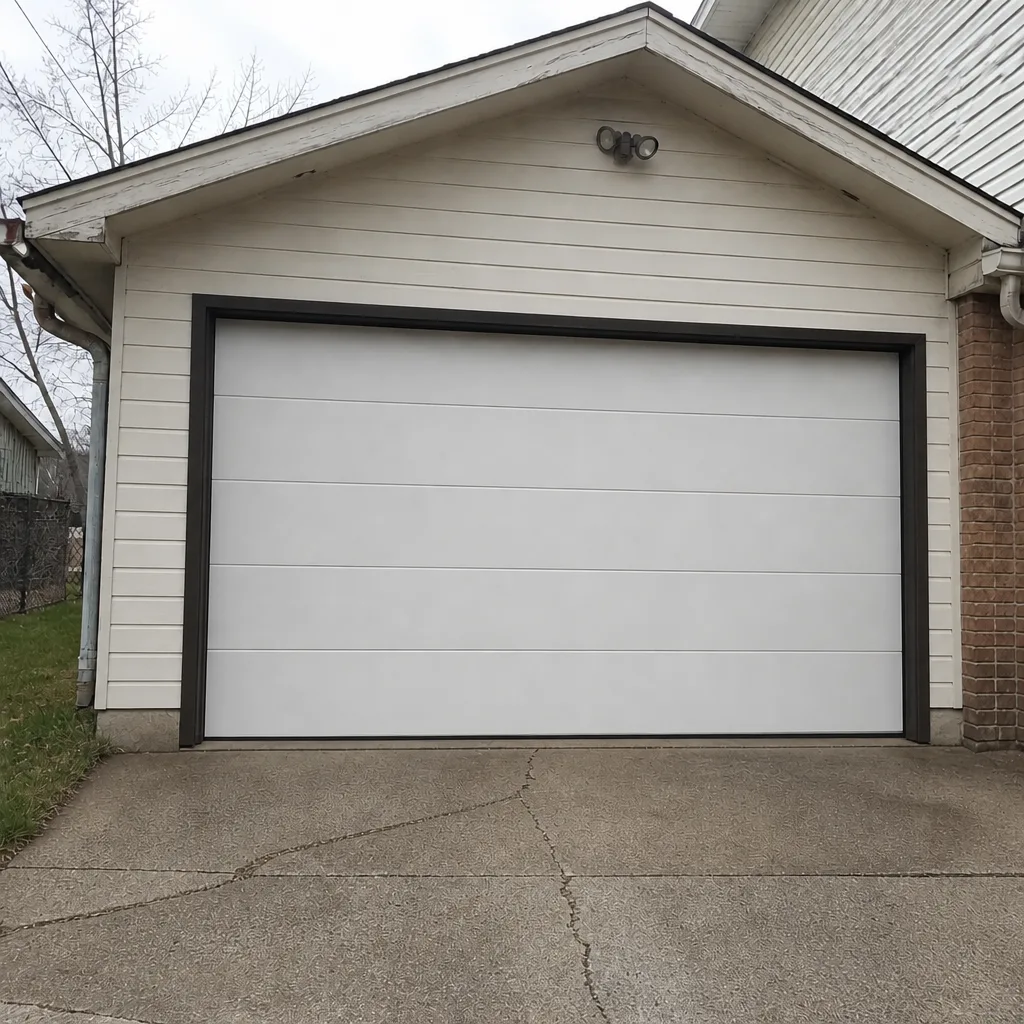
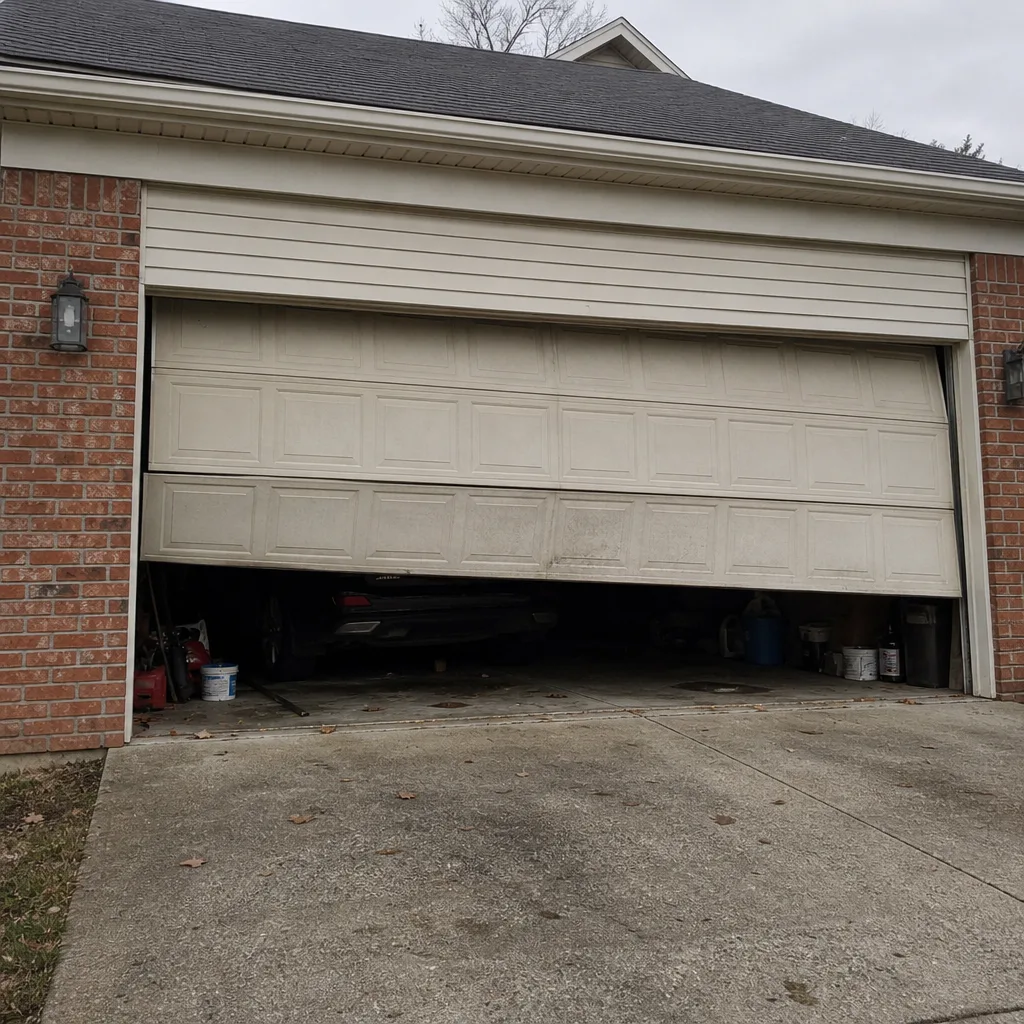
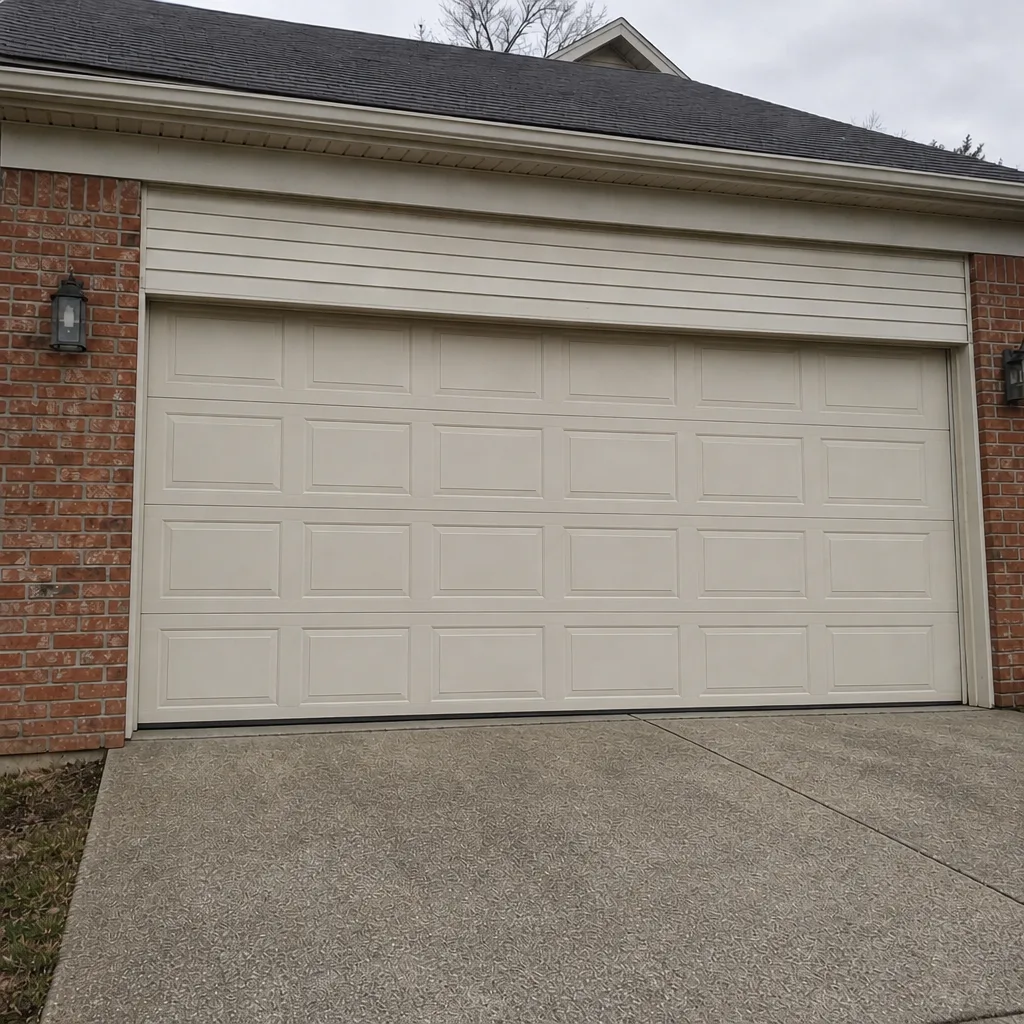
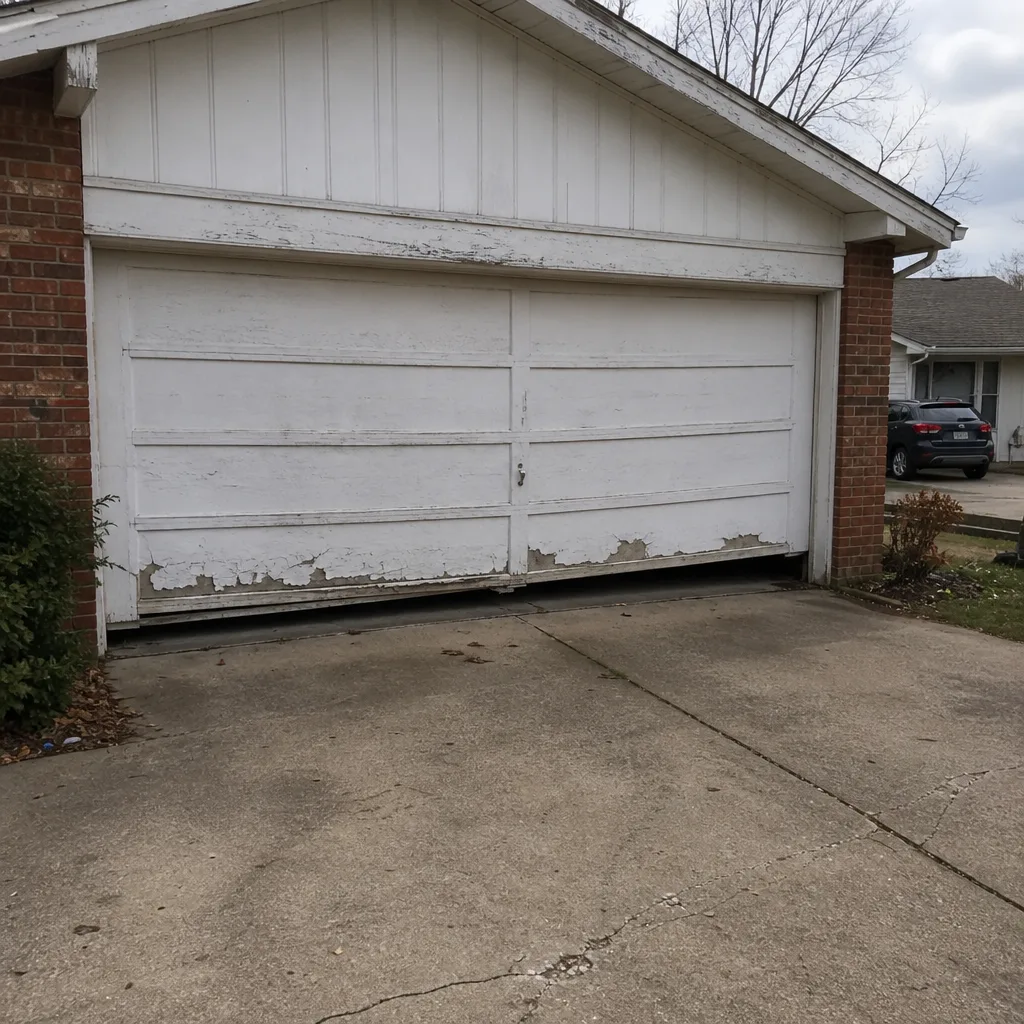
See the difference
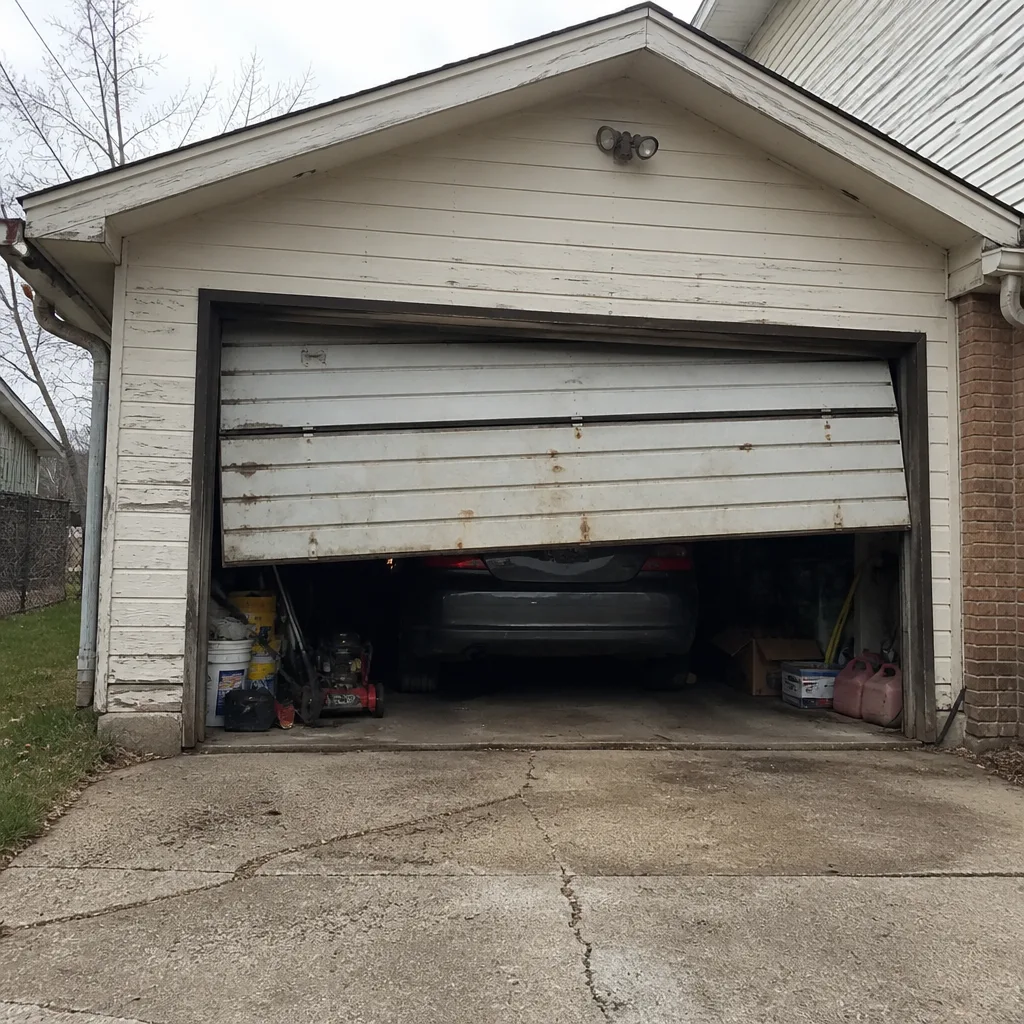 Before
 After
 Before
 After
 Before
 After
When to Call a Professional
Call a professional whenever the job involves a torsion or extension spring, a lift cable, the bottom bracket, or the inside of the opener housing. Also call when the door has come off its track, when the door won’t close and you need the house secured, or when you’ve run the diagnostic pass above and can’t pin down the cause. If you have a spring that’s visibly broken, a cable that’s slack or frayed, or a door that slams down when released, don’t use it again until it’s fixed. Florence Garage Door Repair Pros offers free estimates in Florence. Our technicians have up to 11 years of experience and are certified to service LiftMaster, Chamberlain, Genie, Clopay, Amarr, Wayne Dalton, Craftsman, and Raynor equipment, so we likely work on the brand you already have. Call (844) 681-4337. We answer 24/7. Fast dispatch from 7am to 7pm, Sunday through Friday, and we’re closed on Saturday.
Frequently Asked Questions
No. Torsion and extension springs store mechanical energy that can release violently, and releasing it safely requires a proper winding bar and training. There’s no tool a homeowner can buy at a local hardware store that makes this job safe to do without experience. The small amount you save on labor doesn’t come close to offsetting the risk.
Typical estimates in Florence run about $120 to $220 for a bottom seal, $140 to $240 for a full roller set, $180 to $340 for one spring (a pair is usually replaced together at roughly twice that), and $150 to $300 for cable replacement. Opener repairs typically fall between $180 and $380. A written estimate from the technician sets the final price, and the estimate is free. Call (844) 681-4337 for exact numbers on your door.
It can. Manufacturer warranties from door brands and opener brands generally cover defects in materials and installation, not homeowner modifications, and spring or opener failures traced to improper work are commonly excluded. Your homeowner’s insurance may also exclude damage caused by faulty workmanship. Check with your specific insurer before starting any job that involves springs, cables, or opener internals.
Yes, in most cases. The six-step diagnostic pass in this guide (listen, inspect springs, check cables, test balance, test safety reverse, test wall button versus remote) gives you a specific symptom to report. A precise description shortens the service call and helps the technician bring the right parts, which is where the savings actually happen.
The major residential brands are all supported locally, including LiftMaster, Chamberlain, Genie, Clopay, Amarr, Wayne Dalton, Craftsman, and Raynor. Those eight cover nearly every system found in Florence homes. If your opener or door is one of those, there’s no need to hunt down a brand-specific dealer.
We answer 24/7. Fast dispatch from 7am to 7pm, Sunday through Friday. Most stuck-door and broken-spring calls get same-day service when you call during dispatch hours. We’re closed on Saturday. If you call outside dispatch hours, we’ll book you into the next opening.
The Bottom Line
DIY garage door work makes sense for a specific and useful set of tasks: seals, rollers, remotes, photo-eyes, lubrication, and the visual and balance tests that tell you exactly what’s failing. Everything touching springs, cables, brackets, and opener internals belongs with a trained technician, not because homeowners can’t, but because the assembly stores energy that doesn’t care how careful you are. Get the diagnosis right yourself, fix the low-tension stuff with confidence, and call a pro for the rest. The labor you save on a spring replacement is small compared to the risk, and it’s the one repair where the math is never in your favor. In Florence, that’s the line we’d draw on our own homes.
Florence Garage Door Repair Pros works on the brand you already own, handles spring repair, garage door opener repair, and full installation under one roof, and can arrange an emergency visit when a stuck door leaves your house exposed. When you’re ready for a clear diagnosis and a written price, call (844) 681-4337 for a free estimate. We answer 24/7. Fast dispatch from 7am to 7pm, Sunday through Friday.
Written by the team at Florence Garage Door Repair Pros.